- Homepage
- Interesting
- After the Accident, the Female CEO Feigned Unconsciousness—Her Single Dad Assistant’s Shocking Words Left Her Speechless!
After the Accident, the Female CEO Feigned Unconsciousness—Her Single Dad Assistant’s Shocking Words Left Her Speechless!
 admin
Posted on
admin
Posted on
After the Accident, the Female CEO Feigned Unconsciousness—Her Single Dad Assistant’s Shocking Words Left Her Speechless!
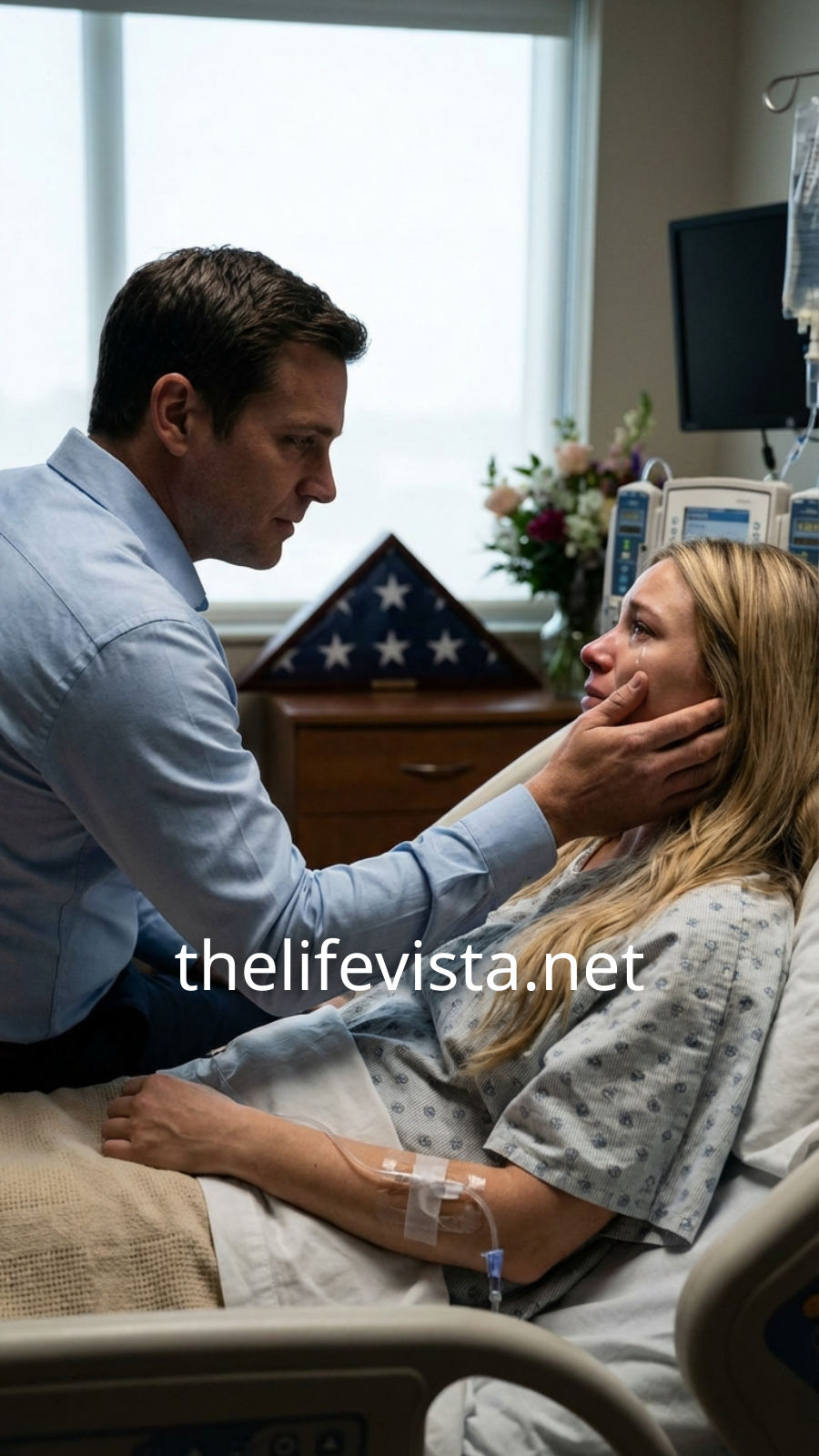 After the crash, Clare Whitmore lay motionless in the hospital bed, machines breathing for her. The doctors declared her in a deep coma. But the truth was different. Clare was fully awake. She chose to stay silent, eyes closed, body still. She wanted to see who would stay loyal when she no longer held power.
When Ethan Brooks, her quiet assistant and single father, thought she could not hear him, he leaned close and said something that left her frozen inside. Not flattery, not pity, just raw truth. What gets spoken when power disappears.
Clare Whitmore had built her empire on control. Every decision in the boardroom carried her signature. Every contract bore her final word. She ran Whitmore Industries with a precision that left no room for weakness. People admired her from a distance and feared her up close. She preferred it that way. Trust was a luxury she could not afford, not when every handshake could hide a knife.
Her assistant, Ethan Brooks, was different from the others. He never tried to impress her with grand gestures or rehearsed compliments. He simply did his work. He organized her schedule, handled her calls, prepared her files. He was a widower raising a young daughter alone, and he kept that part of his life separate from the office.
Clare respected that she did not need to know about his personal struggles. She only needed him to be reliable, and he was. The accident happened on a Tuesday evening. Clare had just left a tense meeting with the board. Tensions were high. Some members questioned her latest acquisition strategy. She defended her position with the same cold logic she always used, but she could feel the resistance building.
On her way home, her car collided with a truck that ran a red light. The impact was brutal. Metal twisted. Glass shattered. Sirens wailed in the distance. When she woke in the private hospital room, her body felt heavy. Tubes ran into her arms. A ventilator covered her mouth. The ceiling lights above her were too bright.
She heard voices outside the door, muffled and distant. A doctor was speaking to someone about her condition. The words came through in fragments, severe trauma, unresponsive, deep coma. She tried to move her fingers, but nothing happened. Her body would not obey. Then clarity hit her like cold water. She was not paralyzed. She was simply too weak to move yet.
But her mind was sharp. She could hear everything. She could think. She could understand. The doctor believed she was unconscious. And so would everyone else. In that moment, Clare made a decision. She would not correct them. She would let them believe she was gone, lost somewhere in the dark. She would stay silent and listen.
She would finally see who people truly were when they thought she could not hear them. The first 24 hours passed in a haze of medical procedures. Nurses checked her vitals. Doctors discussed her prognosis in clinical terms. No one spoke to her directly. She was a body on a bed, a problem to be managed. The hospital staff treated her with professional detachment, and she did not blame them.
She had built her life on that same detachment. News of the accident spread quickly. The media called it tragic. The board sent flowers. Employees whispered in hallways. Clare Whitmore, the woman who never showed weakness, was now completely vulnerable. Some people would see this as an opportunity.
Others would see it as a loss. Clare wanted to know which was which. On the second day, the hospital allowed visitors. The board members came first, dressed in expensive suits and wearing rehearsed expressions of concern. They stood around her bed and spoke in hushed tones. One of them, a man named Richard Crane, placed his hand on the bed rail and shook his head slowly.
He said it was a terrible tragedy. He said the company would continue in her absence. He said they would honor her legacy. Clare wanted to laugh. Legacy. The word people used when they thought you were already dead. Richard turned to the others and suggested they discuss interim leadership arrangements. Another board member, Margaret Hail, agreed.
They needed to ensure stability. She said the shareholders would expect decisive action. They moved toward the door, still talking, already planning. Clare lay still and listened to every word. She had suspected Richard wanted her position. Now she knew for certain. After the board members left, the room fell quiet again.
Clare could hear the steady beep of the heart monitor, the mechanical hiss of the ventilator. She wondered how long she could maintain this act. Days? Weeks? Her body was recovering. She could feel it. Soon she would regain enough strength to move, and then the choice would become harder. But for now, she would wait.
The door opened again. This time, the footsteps were softer, more hesitant. Clare recognized the rhythm. It was Ethan. He walked to the side of her bed and stood there without speaking. She could sense him looking at her, taking in the tubes and machines, the stillness of her body. He did not touch the bed rail or offer empty words of comfort.
He just stood there. Finally, Ethan spoke. His voice was quiet, almost careful. He said he was not sure if she could hear him, but he wanted to talk anyway. He said the office felt strange without her. People were whispering, making plans, positioning themselves. He said he had been asked to sign a statement confirming her condition, something the board could use to justify their next moves. He had refused.
They told him he was being difficult. He told them he worked for Clare, not for them. Clare felt something shift inside her. Ethan had always been efficient, always professional. She had never thought about what that loyalty actually meant to him. She had assumed it was just part of the job. But now, hearing him speak, she realized there was more to it.
He was not performing for an audience. He thought she was unconscious. He thought no one was listening. This was real. Ethan continued. He said he knew Clare did not trust people easily. He said he understood why. In her position, trust was dangerous, but he wanted her to know that he had stayed all these years, not because he needed the job, though he did, but because she had given him a chance when no one else would.
He had applied to dozens of companies after his wife died. Every interview ended the same way. They saw a single father and assumed he would be unreliable, distracted, unable to commit. Clare had looked at his resume and hired him on the spot. She never asked about his daughter. She never made him feel like his personal life was a problem.
She just expected him to do the work—and he did. He said he had tried to quit once, about a year ago. He told Clare he had received an offer from another firm. Better hours, less pressure. She had looked at him across her desk and told him the offer was garbage. She said he was worth more than they were offering, and if he wanted better hours, she would adjust his schedule.
She said she did not have time to train someone new. He had stayed. At the time, he thought it was just about convenience for her. Now he wondered if maybe she had actually wanted him to stay. Ethan’s voice dropped lower. He said he did not know if she would wake up. The doctors were not optimistic, but if she could hear him, he wanted her to know that he was not going anywhere.
The board could pressure him all they wanted. He would not help them take her company. He would not betray her trust. She had stood by him when he was a single father nobody wanted to hire. He would stand by her now.
Then Ethan did something unexpected. He reached out and briefly touched her hand. Just a light contact before pulling away.
He said he had to go pick up his daughter from school. He would come back tomorrow. He left the room quietly, the door clicking shut behind him.
Clare lay in the bed, her mind racing. Ethan’s words had cut through every defense she had built. She had always believed that people stayed because of what she could offer them—power, money, influence.
She had never considered that someone might stay simply because she had treated them fairly. She had hired Ethan because his resume was solid and she needed an assistant. She had kept him because he was good at his job. She had never thought about what that might mean to him.
For the first time in years, Clare felt something close to doubt. She had spent her entire career assuming the worst about people. It kept her sharp, kept her protected. But what if that assumption had also made her blind? What if she had been so focused on watching for betrayal that she missed the people who were actually loyal?
The machines around her continued their steady rhythm. The room remained dim and quiet. Clare knew she could not stay like this forever. Eventually, she would have to wake up to reclaim her position, to face whatever the board had planned. But right now, in this suspended moment, she had learned something valuable. She had learned that Ethan Brooks was not just an assistant.
He was someone who saw her as more than just a title, more than a position of power. He saw her as a person who had given him a chance, and he had not forgotten. Clare made a silent promise to herself. When she woke up, things would be different. Not everything. She would still run her company with the same precision and control.
But she would pay closer attention to the people who had earned her trust. She would stop assuming that loyalty always came with a price, and she would make sure that Ethan Brooks knew his loyalty had not gone unnoticed. But first, she had to wait. She had to see what else would be revealed while everyone thought she was gone.
She had opened a door by choosing to stay silent, and she could not close it yet. There were more truths to uncover, more masks to see removed. The board was already making moves. Ethan had warned her. She needed to know exactly who was positioning themselves against her before she could act. So, Clare remained still. She controlled her breathing, kept her eyes closed, her body unresponsive.
She had built her career on control. And now she would use that same discipline to see the truth. The accident had taken her power away, at least on the surface. But in losing that power, she had gained something unexpected. She had gained clarity. She had gained sight. And when the time came, she would use both to reclaim everything that was hers.
The days that followed brought a parade of visitors, each one revealing themselves in ways they never would have if Clare had been awake. She lay motionless, listening to conversations that peeled back the polished surface of her company and exposed what festered underneath. The board met three times in the first week, and each meeting confirmed what she had suspected.
They were not waiting for her to recover. They were dividing her empire while she was still breathing. Richard Crane emerged as the most aggressive. He spoke with the confidence of someone who believed he had already won. During his second visit to her hospital room, he brought Margaret Hail with him. They stood at the foot of her bed, discussing the quarterly projections as if Clare were already dead.
Richard said the acquisition she had been pushing for would need to be cancelled. Too risky, he claimed. Margaret agreed. Though Clare knew Margaret had supported the deal just two weeks ago, they were rewriting her strategy, erasing her decisions, and they didn’t bother to lower their voices. Richard turned to leave, then stopped.
He looked back at Clare’s still form and said it was probably for the best. He told Margaret that Clare had been getting too aggressive, taking too many risks. The company needed steady leadership now, someone who understood caution. Margaret murmured something about Clare’s legacy, and Richard cut her off. He said legacy didn’t matter if the company collapsed.
They left, and Clare felt a cold rage settle in her chest. She had built Whitmore Industries from the ground up. Richard had joined the board 5 years ago, bought his way in with inherited money, and now he spoke about her life’s work as if it were his to fix. But Clare could not move. She could not speak. She could only lie there and absorb the truth.
She had created a structure where power bred ambition, and ambition bred betrayal. She had thought that was simply the cost of success. Now she was paying that cost in full.
Ethan returned every day, usually in the late afternoon. He never stayed long. He would sit in the chair beside her bed and talk about small things. He mentioned the traffic on the way to the hospital. He told her about a presentation he had to organize for the board, though he said they barely looked at it. He talked about his daughter Emily, who was 7 years old and had recently decided she wanted to be a veterinarian. Clare had never heard him talk about Emily before.
In the office, he had kept that part of his life private, and Clare had never asked. Now, listening to him describe the way Emily tried to rescue every stray animal she found, Clare realized how little she knew about the man who had worked beside her for years.
One afternoon, Ethan came in looking tired. He sat down heavily in the chair and rubbed his face with both hands. He said the board was putting pressure on him. They wanted him to provide documentation about Clare’s recent decisions, emails, and files that could support their claims that she had been taking excessive risks. They told him it was for the company’s protection. Ethan had refused, and now they were threatening his position.
He said he knew they could fire him. He said he knew fighting them was probably foolish, but he could not help them tear down what Clare had built. He leaned forward, elbows on his knees, and stared at the floor. His voice went quieter.
He said he had been thinking about the day Clare hired him. He had walked into her office expecting another polite rejection, another version of the same conversation he had been having for months. Instead, Clare had looked at his resume for maybe 2 minutes, asked him three questions, and told him the job was his.
He asked her if she wanted to know about his situation, about being a single father. She had looked at him and said his personal life was his business. All she cared about was whether he could do the work. He told her he could. She told him to start Monday. Ethan said that moment had changed everything for him. After his wife died, he had felt invisible. People looked at him and saw a complication, a risk, someone who would need accommodations and understanding.
Clare had looked at him and seen someone capable. She didn’t offer him sympathy. She offered him a job. She expected him to succeed. And that expectation had been more valuable than any kind words could have been.
He straightened up in the chair and looked at Clare’s face, at her closed eyes, and the tube in her mouth.
He said he did not know if she could hear him, but he hoped she could. He wanted her to know that he hadn’t forgotten what she did for him. He promised that he would not let Richard and the others destroy her company while she was unable to defend it. He vowed to find a way to stop them, even if it cost him everything.
Then Ethan stood, walked to the door, and left. Clare felt something crack inside her. She had spent her entire life building walls between herself and others. She had believed that distance was necessary—that emotional connections were weaknesses waiting to be exploited. But Ethan was proving her wrong.
His loyalty was not a calculation. It was not a strategy. It was simply who he was. She had given him a chance, and he had turned that chance into something solid and lasting. She had not tried to earn his loyalty. She had not even known it existed, but it was there, and it was real.
The following day, the board held an emergency meeting. Clare knew because a nurse mentioned it to a colleague outside her room. The meeting was happening at the hospital, in one of the private conference rooms on the administrative floor. Richard had insisted on it, claiming they needed to be close in case Clare’s condition changed. Clare understood the real reason. He wanted to create a sense of crisis, a narrative that required immediate action.
He was building a case for removing her, and he was doing it right above her head.
That evening, Ethan came to see her again. He looked worse than before. His shirt was wrinkled, his tie loose. He sat down and told Clare what had happened. The board had spent 4 hours discussing her future and the company’s future as if the two were separate things.
Richard had presented a proposal to temporarily remove Clare from her position as CEO, citing her incapacitation and the need for stable leadership. Margaret had seconded the motion. Others had voiced concerns, but no one had outright opposed it. The vote was scheduled for the following week.
Ethan said Richard had pulled him aside after the meeting. Richard told him this was his chance to prove where his loyalties really were. If Ethan wanted to keep his job, he needed to sign a statement. The statement would confirm that Clare had been erratic in the weeks before the accident, that she had been making poor decisions, that her judgment had been compromised. Richard said it was just a formality, something to help the board justify their actions to the shareholders.
He said Ethan would be rewarded for his cooperation.
Ethan looked at Clare, his expression hard. He said he told Richard to go to hell. Not in those exact words, but the meaning was clear. Richard had smiled, a cold expression that did not reach his eyes. He told Ethan he was making a mistake. He said loyalty to a woman in a coma was admirable but stupid.
He said Ethan should think about his daughter, about what would happen if he lost his job and could not find another one. Then Richard walked away, leaving Ethan standing alone in the hallway. Ethan’s voice shook slightly as he recounted this. He said he was scared. He said he did not know how to fight people like Richard—people who had money, connections, and no moral boundaries.
He said he was just an assistant, a single father trying to keep his head above water. But he also said he could not sign that statement. He could not betray Clare. Not after everything she had done for him. He would rather lose his job than lose his integrity.
Clare wanted to scream. She wanted to sit up, tear the tubes from her body, and march into that boardroom to destroy Richard Crane. But she could not move. She could only lie there and listen to Ethan tear himself apart, trying to protect her.
She had never asked for his loyalty. She had never earned it—not really. But he was giving it anyway, and it was costing him everything.
Ethan stayed longer that night. He talked about Emily, about how she asked him every day when he would be home for dinner.
He had been working late too often, trying to manage Clare’s affairs and keep the board at bay. He said Emily didn’t understand why he was so distracted. He didn’t know how to explain it to a seven-year-old. How do you tell a child that sometimes you have to fight for something even when you know you will probably lose? He stood to leave but then turned back.
He had one more thing to tell Clare. He knew she had always been guarded, always careful about who she trusted. He understood that the world had probably given her a thousand reasons not to trust anyone. But he wanted her to know that she had at least one person who would never betray her.
“I will stand by you no matter what happens,” he said. “Because that’s what you do for someone who sees you as more than your worst moment.” After Ethan left, the room felt emptier than usual. Clare replayed his words in her mind. She thought about the person she had been before the accident. The woman who measured every relationship in terms of utility and risk.
That woman would have seen Ethan’s loyalty as a tool, something to be used and managed. But Clare was no longer that woman—at least, not entirely. Lying in this bed, stripped of her power and control, she had been forced to see things differently. She had been forced to see Ethan differently.
The next morning brought another visitor—a man named David Wells, one of the junior board members, came to her room alone. He stood near the door, not approaching the bed. He spoke quietly, almost to himself. “I’m sorry,” he said. “I know what Richard is planning, and I don’t agree with it. But I can’t stop it. Richard has the votes. He has the influence. I’m just one voice, and one voice isn’t enough to change anything.”
David left quickly, as if staying too long might implicate him in something. Clare understood. He wanted to ease his conscience without actually taking a risk. He wanted to feel like he had done something without doing anything at all.
She had seen this type of cowardice before. It was common in boardrooms—this ability to recognize wrong and still participate in it. David Wells would vote with Richard when the time came, and he would tell himself he had no choice.
That afternoon, Ethan did not come. Clare felt his absence like a physical weight. She wondered if Richard had finally gotten to him, if the threats had worked. She wondered if Ethan had decided that protecting her was not worth losing everything.
She would not blame him if he had. She had no right to expect him to sacrifice his future for hers. But the next day, Ethan returned. He looked exhausted, but determined. He sat down and told Clare he had spent the previous day meeting with a lawyer.
He said he was preparing a counter-statement, something that would document Richard’s attempts to manipulate him and fabricate evidence against Clare. He said he didn’t know if it would make a difference, but he had to try.
He said he had also reached out to a few shareholders who had always supported Clare, people who might be willing to question the board’s actions. Ethan leaned closer to the bed. “I know you can’t respond,” he said softly. “You can’t tell me if I’m doing the right thing. But I need you to know, I’m doing this for you.”
But he said he was going to keep fighting anyway. He said she had given him a chance when no one else would, and now, he was going to return that favor, even if she never knew about it. Clare felt something shift inside her, something profound. She had always believed that power was the only currency that mattered. But Ethan was proving that wrong.
He had no power, no leverage, no advantage. All he had was his integrity and his loyalty. And somehow, that was enough to make him stand against people who could crush him without effort. He wasn’t fighting because he expected to win. He was fighting because it was the right thing to do.
For the first time since the accident, Clare felt something close to hope. Not hope that she would recover—though she knew her body was getting stronger every day—but hope that maybe she hadn’t been as alone as she thought. Hope that maybe there were people in the world who saw her as more than just a position or a title. Hope that when she finally woke up and reclaimed her company, she wouldn’t be starting from nothing.
But that moment had not come yet. The board vote was approaching. Richard was consolidating his power, and Clare was still lying in a hospital bed, pretending to be unconscious, waiting for the right moment to act. She knew that moment was coming soon. She could feel it building like pressure behind a dam, and when it broke, everything would change.
The emergency meeting was scheduled for 10:00 in the morning on the ninth day after the accident. Clare knew because the nurses had been instructed to prepare her room for possible visitors afterward. Richard wanted the board close by when they voted to remove her. He wanted to be able to walk down the hall and look at her unconscious body to remind everyone why this action was necessary.
Clare had regained enough strength to move her fingers slightly, but she kept them still. The time was not right yet. She heard footsteps in the corridor outside—multiple sets moving together. Voices drifted through the partially open door. Richard was speaking to someone about procedure, about making sure everything was documented properly.
Margaret responded with something Clare couldn’t quite hear. Then the footsteps faded toward the conference room and silence returned. An hour passed. Clare counted the minutes by the rhythm of the machines around her. Her body was stronger now. She could feel the difference. The weakness that had pinned her down in the first days was gone.
She could move if she wanted to. She could open her eyes. She could pull the ventilator tube from her throat. But she waited. Control was everything, and timing was control.
The door opened again. A nurse came in to check her vitals, adjusted something on one of the machines, and left. More time passed. Clare focused on breathing steadily, on keeping her heartbeat even.
She had learned to control these things over the past days, to prevent any sign that might give her away. The machines reported exactly what she wanted them to report. She was still in a coma. She was still unreachable.
Then she heard rapid footsteps approaching. The door swung open hard enough to hit the wall. It was Ethan.
His breathing was quick, uneven. He crossed the room to her bedside and stopped. Clare could sense the tension radiating from him. Something had happened, something urgent. Ethan spoke quickly, his words tumbling over each other. He said Richard had moved the vote up. They were voting now, right now, in the conference room upstairs.
Richard claimed they had waited long enough, that the company could not afford any more delays. He had convinced enough board members that this was the responsible thing to do. Ethan said he had tried to stall them, tried to argue for more time, but Richard had shut him down. Then Richard had demanded that Ethan come to the meeting to provide his official statement about Clare’s condition.
Ethan said Richard wanted him to confirm that Clare showed no signs of recovery, that the doctors had indicated she might never wake up. Richard had prepared a document. All Ethan had to do was sign it. If he signed, he could keep his job. If he refused, Richard would have him removed from the building immediately.
Ethan’s voice cracked slightly. He said he had walked out of the meeting instead of answering. He had come here to Clare’s room because he didn’t know what else to do. He leaned against the bed rail. He said he was sorry. He said he had tried to protect her, tried to buy her time, but he had failed.
Richard had outmaneuvered him at every turn. The vote would happen within the hour, and there was nothing Ethan could do to stop it. He said he knew Clare could not hear him, but he needed to say it anyway. He needed her to know that he had tried.
Clare made her decision. She had heard enough. She had seen enough.
Richard and the others had revealed themselves completely. They were not waiting for her to die. They were erasing her while she still breathed. And Ethan, the one person who had remained loyal, was being torn apart, trying to defend her. It was time to end this.
Clare opened her eyes. The sudden movement was small but unmistakable.
Ethan jerked back, his expression shifting from despair to shock. Clare blinked slowly, adjusting to the light. She could see him clearly now, could see the exhaustion carved into his face, the fear and confusion in his eyes. She tried to speak, but the ventilator tube blocked her throat.
She reached up with one hand slowly, deliberately, and wrapped her fingers around the tube. Ethan realized what she was doing. He moved quickly, hitting the call button for the nurse, then turning back to Clare. He told her to wait, to let the medical staff handle it. But Clare did not wait. She had been waiting for 9 days.
She pulled the tube from her throat in one smooth motion. The sensation was brutal, painful, but she did not stop. She dropped the tube onto the bed and drew in a deep breath of unassisted air. Her voice came out rough and low, barely more than a whisper. She said Ethan’s name.
He stared at her, unable to process what was happening. She said it again, stronger this time.
She told him she heard everything. She told him she knew what Richard was doing. She told him she was awake, and she was not going to let them take her company.
The door burst open. Two nurses rushed in, followed by a doctor. They saw Clare sitting up, the ventilator tube discarded, and froze for a fraction of a second before training took over.
The doctor moved to her side, checking her pupils, her pulse. He asked her questions. Could she hear him? Did she know where she was? What was her name? Clare answered each question clearly and directly. She told him she had been conscious for days. She told him she had chosen to remain silent.
The doctor looked stunned, but he continued his examination. One of the nurses left the room quickly, presumably to inform someone in administration. Clare knew word would spread fast.
She looked at Ethan, who was still standing by the bed, his expression somewhere between relief and disbelief. She told him to go upstairs. She told him to tell Richard and the board that she was awake and she was coming to the meeting.
Ethan hesitated, then nodded and left the room at a near run. The doctor wanted Clare to stay in bed to undergo more tests before she moved. Clare told him she appreciated his concern, but she had a meeting to attend.
He tried to argue. She cut him off. She said she had been lying in this bed for over a week, listening to people try to dismantle her life’s work.
She said she was done listening. She was going to that conference room, and he could either help her get ready or get out of her way.
The doctor stepped back. He told the remaining nurse to bring a wheelchair. Clare said she would walk. The nurse started to protest, but Clare was already swinging her legs over the side of the bed.
Her body was weak, her muscles protesting after days of stillness, but she forced herself to stand. She steadied herself against the bed rail, then took a step. Her legs held. She took another step.
The doctor stayed close, ready to catch her if she fell, but Clare did not fall. She made it to the doorway and looked back at the room that had been her prison and her vantage point for 9 days.
Then she walked into the corridor. The nurses at the station looked up and saw her. One of them gasped. Clare ignored them and moved toward the elevator. The doctor followed, still trying to convince her to return to bed.
Clare pressed the button for the administrative floor and waited. When the elevator doors opened, she stepped inside. The ride up was short.
Clare used the time to prepare herself. She knew what she was walking into. Richard would have already started the vote. He would be confident, certain of his victory. The board members would be ready to sign whatever documents he put in front of them, and then she would walk through that door, and everything would change.
The elevator stopped, the doors opened. Clare stepped out into a quiet hallway. She could hear voices coming from the conference room at the end of the corridor. She walked toward them, each step more steady than the last. The doctor had stopped following her. She was alone now, and that felt appropriate.
She had started this company alone. She would reclaim it the same way. She reached the conference room door. Through the glass panel, she could see the board seated around the long table. Richard stood at the head, holding a stack of papers. Margaret sat to his right, her expression neutral. The others were scattered along both sides.
Ethan stood near the door, his back to the glass. He must have just finished delivering her message because Richard was in the middle of responding. She could not hear the words, but she could see the dismissive gesture he made with one hand.
Clare pushed the door open. The room went silent. Every head turned toward her.
Richard’s expression went through several rapid changes from irritation at the interruption to recognition to something that looked almost like fear. Margaret’s eyes widened. The other board members simply stared. Ethan turned and saw her, and the relief on his face was so clear, it was almost painful to witness. Clare walked into the room.
Her hospital gown was hardly appropriate for a board meeting, but she did not care. She moved to the opposite end of the table from Richard and placed both hands on the surface. She looked at each board member in turn, letting them see that she was fully aware, fully present, fully in control.
She spoke clearly, her voice carrying despite its roughness. She said she had been awake for 9 days. She said she had heard every conversation, every scheme, every betrayal. She said she knew exactly who had stood by her and who had tried to take advantage of her condition.
She looked directly at Richard. She said she knew about his attempt to fabricate evidence, to pressure Ethan into signing false statements, to manipulate the board into voting against her.
Richard tried to recover. He said this was highly irregular. He said Clare was clearly not well, that she should be in bed recovering. He said the board had a duty to make decisions in the company’s best interest. Clare cut him off. She said the board’s duty was to the company she had built, not to Richard’s ambition.
She said every conversation he had in her hospital room had been witnessed. She said every threat he made to Ethan had been noted.
She turned to the other board members. She said she understood that some of them had been misled, that they had believed Richard’s narrative about her recklessness and poor judgment. She said she was willing to discuss those concerns directly now that she was able to respond.
But she said any vote taken in her absence, any decision made while she was incapacitated would be challenged and overturned. She said she was back and she was not going anywhere.
Margaret spoke up. She said they were all relieved to see Clare awake. She said, “Of course, the vote should be postponed.”
David Wells nodded quickly, agreeing. Others murmured similar sentiments. Richard stood alone at his end of the table, his carefully constructed plan falling apart in real time.
Clare looked at Ethan. She said she owed him an acknowledgement. She said he had stood by her when no one else would. She said he had refused to be manipulated or intimidated, even when it would have been easier to give in.
She said his loyalty and integrity had protected not just her position, but the entire company. She said, “Effective immediately, Ethan would no longer be just her assistant. He would be promoted to chief of staff with full authority to act on her behalf.”
Ethan looked stunned. He started to say something, but Clare shook her head.
She told him he had earned it. She told him she should have recognized his value years ago, but she was recognizing it now.
She turned back to Richard. She said his position on the board was terminated, effective immediately. She said he had violated his fiduciary duty, attempted to manipulate company records, and conspired to remove her through false pretenses.
She said he could leave voluntarily, or she would have security escort him out. Richard’s face went red, but he did not argue. He gathered his papers, shot one last look of fury at Clare, and left the room.
The remaining board members sat in silence. Clare told them she would schedule a proper meeting for the following week once she was fully recovered.
She told them she expected honest discussion about the company’s direction, about the decisions she had made, about any legitimate concerns they had. But she said that discussion would happen openly, with her present and able to respond. She said the time for scheming and manipulation was over.
She left the conference room with Ethan walking beside her.
As soon as they stepped into the hallway, her legs began to shake. The adrenaline that had carried her through the confrontation was quickly fading, and exhaustion rushed in to take its place. Ethan caught her elbow, steadying her. He asked if she needed the wheelchair, and Clare, finally aware of her fatigue, admitted that she probably did.
They made it back to her room, where the doctor was waiting, a mix of relief and irritation on his face. He immediately ordered Clare back into bed. This time, she didn’t argue. She was acutely aware of just how tired she was and how much her body had endured. She let them help her back into the bed and allowed them to reconnect some of the monitors, but she refused to let them sedate her. She needed to stay awake just a little longer.
When the medical staff finally left them alone, Clare turned her gaze to Ethan. She thanked him. He tried to brush it off, but she wouldn’t let him. “I mean it,” she insisted. “I’ve spent my career assuming people are only loyal when it benefits them. You proved me wrong. And I won’t forget that.”
Ethan settled into the chair beside her bed, his voice soft. “I’m just glad you’re okay,” he said. “These past nine days have been the hardest of my life, watching you lie there, not knowing if you would ever wake up.”
Clare’s eyes softened. “I heard everything you said,” she replied. “I know about your wife, about Emily, about the struggles you’ve faced.” She paused, her voice sincere. “I’m sorry I never asked before. But things will be different now.”
The machines beeped quietly in the background, and outside the window, the afternoon light began to fade. Clare closed her eyes, this time surrendering to true rest, not pretending. She had reclaimed her company. She had exposed the traitors. And in the process, she had found something she hadn’t been searching for.
Proof that loyalty, without calculation, still existed in the world. When she woke again, she would begin rebuilding. But this time, it would be different. She would build something stronger, something that valued the people who had earned her trust. Starting with Ethan Brooks.