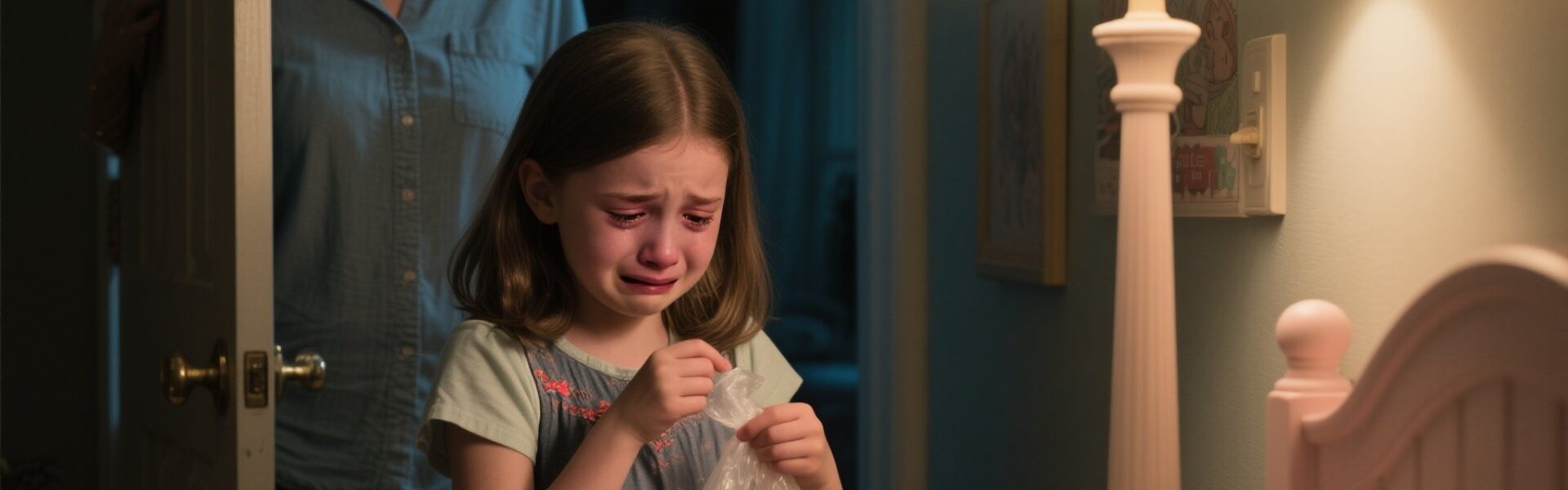
My sister had recently gone through a rough divorce, and she needed help. I didn’t mind. Ava was a sweet child—quiet, polite, always saying “thank you” in a tiny voice that made my heart soften.
My daughter Sophie, who was eight, loved having her cousin around. They played with dolls, watched cartoons, and built pillow forts in the living room like they were best friends.
At first, everything felt normal.
But after the second weekend, I noticed something strange.
Ava barely ate.
Every time we sat down for dinner, she would poke at her food, take a few tiny bites, then press her hand against her stomach.
“My stomach hurts,” she’d whisper.
I assumed she was adjusting to different food, or maybe she was nervous being away from home. Some kids get stomachaches when they’re anxious.
So I tried to make her comfortable.
I cooked softer meals. Soup. Pasta. Toast. Even her favorite mac and cheese.
Still, she wouldn’t eat.
Instead, she kept repeating the same words:
“My stomach hurts.”
And she always said it while glancing toward the hallway, as if she expected someone to appear.
One Saturday night, I served chicken and rice. Sophie ate happily, but Ava stared at her plate like it was dangerous.
“Ava,” I said gently, “sweetheart, you have to eat a little.”
She shook her head, tears forming.
“I can’t,” she whispered.
My heart tightened. “Why not?”
But she didn’t answer.
She just stood up quickly, holding her stomach, and walked toward the guest room.
I sighed and was about to follow her when Sophie leaned close to me, her voice quiet and serious.
“Mom,” she whispered, “she’s hiding something in the room.”
I froze.
“What?” I whispered back.
Sophie’s eyes were wide. “I saw her earlier. She keeps going in there with food.”
My pulse quickened.
I waited a moment, then quietly walked down the hallway. The guest room door was slightly open.
I peeked inside.
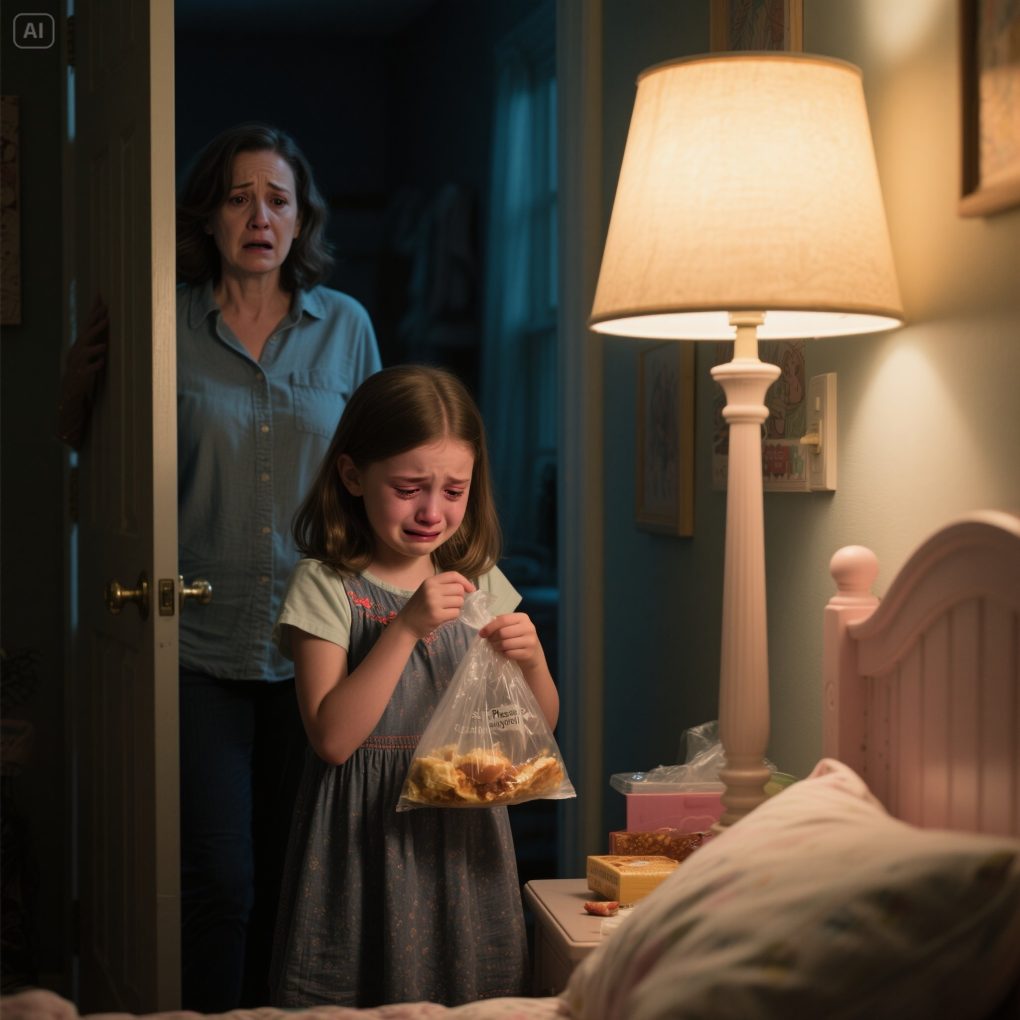
Ava was kneeling beside her little suitcase.
And in her hands was a plastic bag.
She was stuffing food into it—chicken, rice, pieces of bread—hiding it quickly like she was afraid someone would catch her.
My stomach dropped.
“Ava…” I whispered.
She turned sharply.
Her eyes were full of tears, her face flushed with fear.
She clutched the bag to her chest like it was something precious.
And in a trembling voice, she whispered:
“Auntie… please don’t tell anyone.”
I stepped into the room slowly, careful not to scare her.
“Ava,” I said gently, crouching down to her level, “sweetheart… why are you hiding food?”
Her lip quivered.
She shook her head violently, tears spilling down her cheeks.
“I’m sorry,” she whispered. “I’m sorry.”
My heart broke instantly.
I reached out and touched her shoulder. “You don’t have to apologize. I just want to understand.”
Ava squeezed the plastic bag tighter.
Then she whispered something that made my skin go cold.
“If I don’t save it, I won’t have any later.”
My breath caught.
“What do you mean?” I asked carefully.
Ava hesitated, her eyes darting to the door as if she expected someone to burst in.
Then she said, almost too quietly to hear:
“At home… sometimes there’s no dinner.”
My stomach twisted.
“No dinner?” I repeated.
Ava nodded slowly, wiping her face with her sleeve.
“Mom says we have to be quiet,” she whispered. “Because if we ask for food too much, he gets mad.”
He.
My chest tightened.
“Who gets mad, Ava?” I asked, keeping my voice calm even though my hands were trembling.
Ava swallowed hard. “Mom’s boyfriend.”
My heart stopped.
My sister’s boyfriend.
I’d met him only once. He seemed charming—smiling, polite, shaking my hand like he was a good man. I had never suspected anything.
Ava’s voice cracked. “He says food costs money. He says I’m not his kid. He says I eat too much.”
I felt dizzy.
I glanced at the bag again. It wasn’t just food from tonight.
There were other bags too—stuffed under the bed, hidden behind a pillowcase.
She had been doing this every weekend.
Saving food like she was preparing for a disaster.
I sat on the floor beside her.
“Oh, Ava…” I whispered.
She stared at me with terrified eyes. “Please don’t tell my mom. She’ll be angry. She’ll say I’m making trouble.”
I felt tears sting my own eyes.
“Sweetheart,” I said softly, “you are not making trouble. You are a child. You deserve to eat.”
Ava’s face crumpled. “Sometimes I’m hungry at night. I drink water and pretend my tummy is full.”
My throat tightened so hard it hurt.
That wasn’t a stomachache.
That was hunger.
That was fear.
That was a child learning to survive.
I hugged her gently, and she clung to me like she’d been holding her breath for months.
Then she whispered the words that made me feel sick with rage.
“He says if I tell anyone… I’ll have to leave.”
Leave.
As if being hungry wasn’t enough—he wanted her afraid of losing her mother too.
I held her tighter.
And in that moment, I knew I couldn’t stay silent.
Because this wasn’t about snacks.
This was about neglect.
And it was happening behind closed doors.
That night, after Ava finally fell asleep, I sat at the kitchen table staring at the plastic bags of food.
Chicken.
Rice.
Bread.
Food my niece should have been able to eat freely—without fear, without shame.
Sophie sat beside me, hugging her stuffed bear.
“Mom,” she whispered, “is Ava in trouble?”
I shook my head quickly. “No, baby. Ava is not the one in trouble.”
But inside, my heart was burning.
Because the truth was clear now.
Ava wasn’t refusing dinner because she was picky.
She was refusing because she was trained to believe food wasn’t safe.
That eating too much would make someone angry.
That hunger was something to hide.
The next morning, I called my sister.
I tried to keep my voice calm.
“Has Ava been eating okay at home?” I asked carefully.
There was a pause.
Then my sister laughed awkwardly. “She’s dramatic. Always complaining about her stomach. She’s fine.”
My blood ran cold.
“She’s hiding food in bags,” I said quietly. “She told me she’s scared there won’t be dinner later.”
Silence.
Long, heavy silence.
Then my sister’s voice dropped. “She told you that?”
I heard fear in her tone—not concern.
Fear.
And that told me something else.
My sister already knew.
She just didn’t want anyone else to know.
“She said your boyfriend gets angry,” I continued. “Is he hurting her?”
My sister’s voice cracked. “It’s not like that. He’s just… strict. He’s stressed.”
Strict.
That word made me furious.
Starving a child isn’t strict.
It’s cruelty.
I didn’t argue with her on the phone.
Instead, after hanging up, I called child protective services.
My hands shook as I gave them the details—Ava’s words, the hidden food, her fear of being punished.
They took it seriously immediately.
That weekend, when Ava arrived again, she looked exhausted. She hugged me tighter than usual.
And before dinner even started, she whispered, “Did I do something bad?”
I knelt down and held her cheeks gently.
“No,” I said. “You did something brave.”
She started crying again, and I hugged her so tightly my chest hurt.
Sometimes the most heartbreaking thing isn’t seeing bruises.
It’s seeing survival habits in a child who should feel safe.
Saving food.
Eating slowly.
Watching adults’ faces before taking a bite.
That night, Sophie whispered to me, “I’m glad I told you.”
And I realized something important:
Kids notice everything.
They just need someone who listens.
So tell me—if you were in my place, would you confront the family directly and risk them hiding it better? Or would you quietly report it like I did and let professionals handle it?
Because one thing is certain…
A child should never have to hide food like it’s a secret.