On my 35th birthday, my mother’s cake poisoned us… but she died instead.

On my 35th birthday, my mother’s cake poisoned us… but she died instead.
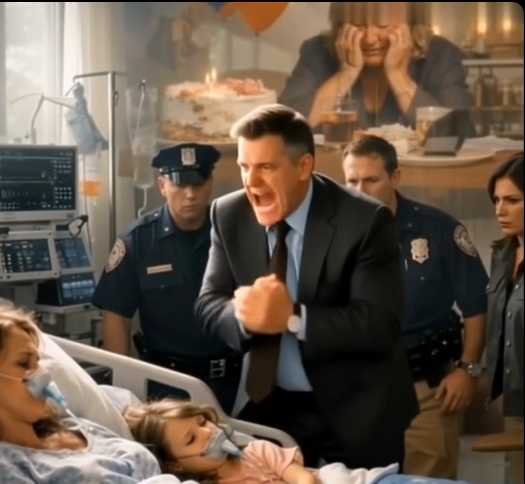
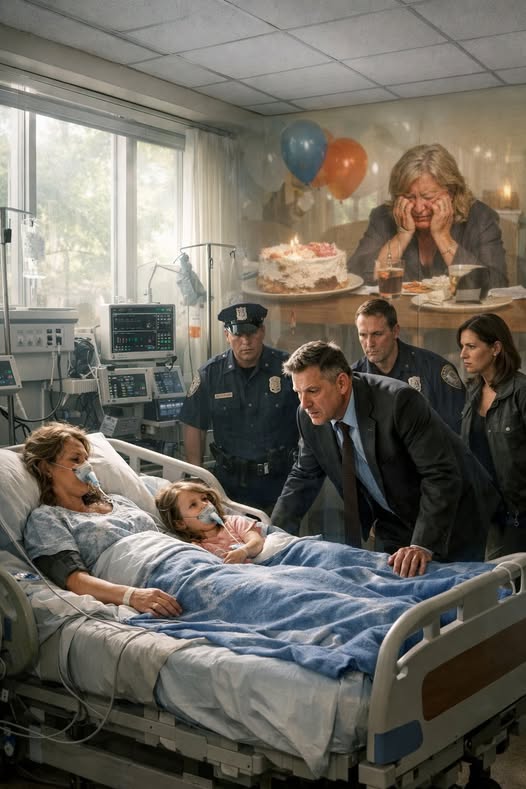
On My 35th Birthday, After Eating The Special Cake My Mother Made, My 5-Year-Old Daughter And I Struggled To Breathe. As My Vision Blurred, I Heard My Mother Crying, “I’m Sorry… But I Had No Choice. If Only You Two Were Gone…” When I Woke Up In The Hospital, Police Were Waiting. “Your Mother Has Passed Away,” They Said. Then The Detective Added, “The Reason She Died… Is Actually…”
Part 1
My thirty-fifth birthday started with a sock stuck to my heel and a smear of strawberry jam on my wrist.
Junie did that thing kids do where they don’t ask permission so much as announce reality. “Mom. I made you breakfast.”
“Did you, now.” I peeled the sock off my skin. It had that damp, cottony smell like it had been hiding in the washer for a week.
She held up a paper plate like a trophy. One waffle, slightly burned on one side, the other side still pale. A little mountain of whipped cream was sliding toward the edge. She’d stuck one candle in it—crooked, blue, already bent.
I wanted to laugh. I wanted to cry. Mostly I wanted coffee.
“You’re a wizard,” I told her, and she beamed so hard the freckles on her nose looked like they’d been turned up to maximum brightness.
We were supposed to go to my mom’s later. That had been the plan for weeks—birthday Sunday at Mom’s, her chocolate cake, the old family ritual. Junie loved it because Grandma Marian let her lick the bowl and didn’t hover when she climbed the couch like it was a jungle gym. I tolerated it because tradition is a warm blanket until you realize it’s been hiding a lot of dust.
My phone buzzed on the counter. Mom’s name lit up the screen.
That alone made my stomach tighten. She didn’t call in the morning unless something was wrong. Or unless she wanted to make sure I didn’t change my mind.
I hit answer. “Hey.”
Her voice came through too bright, too fast. “Happy birthday, honey! You awake? You sound… you sound awake.”
“I’m awake,” I said, and tried to make it gentle. “Junie made me a waffle masterpiece.”
“Oh, good. Good.” A quick inhale like she’d been running up stairs. “Listen, I baked last night. I did it. The cake is done. It’s in the—well, it’s safe. It’s fine.”
“Okay,” I said slowly. “You didn’t have to do that. You could’ve—”
“No. I wanted to,” she snapped, then softened too hard. “I wanted to. It’s our thing.”
The word thing landed like a small stone in my shoe. Our thing. Like it was a contract.
Behind her voice I heard something else: a television low in the background, and the faint click-click of someone tapping a fingernail against glass. That last part could’ve been my imagination. My mother had a whole house of small noises.
“I’ll be there around two,” I said. “Just like we said.”
“Good.” Another inhale. “And don’t stop anywhere first. Just come straight. Traffic will be—” She cut herself off. “Just come straight, okay?”
Junie was watching me, head tilted, her eyes already asking questions. I turned my back toward the sink.
“Mom,” I said, keeping my voice low, “is everything okay?”
There was a pause long enough for me to hear her swallow. “Of course. Why wouldn’t it be?”
Because you sound like you’re holding your breath. Because last time I was there you jumped when a car door shut outside. Because you’ve been texting me at midnight with nothing but question marks.
“I just—” I started.
“I have to go,” she said, too quick, and then, quieter: “Please come.”
The line went dead.
Junie didn’t wait. “Grandma’s making the real cake?”
“Yep.” I forced a smile, the kind that feels like stretching a rubber band over a crack. “The real cake.”
Outside, the day had that early-fall clarity—sunlight like a clean sheet, air cool enough to wake you up. On the drive, Junie sang a made-up song about birthdays and dogs. I let it fill the car because silence would’ve filled itself with other things.
My mom’s place sat on a cul-de-sac in a neighborhood where every lawn looked like it had signed up for the same gym membership. White siding. Blue shutters. A porch swing that never actually swung. When I pulled up, something was different.
A truck was parked half on her driveway, half on the curb. Not hers. Not mine. An older model, dull gray, with mud crusted around the wheel wells like it had been driven straight out of a ditch. The passenger window was cracked open. A faint chemical smell drifted out—sharp, like paint thinner or bug spray.
Junie wrinkled her nose. “Stinky.”
“Stay close,” I told her without thinking.
Mom opened the front door before I even knocked. She was wearing her baking apron, the one with faded cherries printed on it, but it was tied too tight, the knot digging into her waist like she’d been pulling on it for comfort.
“Hi!” she said, too loud. Her smile didn’t make it to her eyes.
Up close, I saw the details I always noticed and never wanted to say out loud. Her lipstick slightly smudged, like she’d put it on in a hurry. The skin under her eyes puffy. Her hands—normally so steady when she sliced cake, folded laundry, signed her name—were trembling around the edge of the door.
Junie launched herself forward. “Grandma!”
Mom hugged her like she needed to prove something to herself. Like she was counting.
“I missed you, peanut,” she murmured into Junie’s hair, and then her gaze snapped to me. “Come in. Shoes off. I mopped.”
I stepped inside and caught another smell layered under the usual homey stuff. The usual was there—vanilla, cocoa, warm butter. But under that was something metallic, faint and sour, like pennies left in milk.
The living room looked normal in a staged-for-company kind of way. Couch cushions fluffed. Family photos facing outward like witnesses. But the coffee table was bare except for her phone, face down, and a set of keys I didn’t recognize—chunky metal keys on a red plastic tag.
“Mom,” I said, nodding toward the truck outside. “Who’s here?”
Her eyes flicked to the window, then back. “Oh. That. It’s—” She cleared her throat. “It’s for… the yard. A guy came by. He’s gone.”
“Then why is his truck still—”
“It’s fine,” she cut in, then lowered her voice like the house might be listening. “Let’s not start with questions. Today’s supposed to be nice.”
Nice. Like it was a switch we could flip.
Junie had already bee-lined for the kitchen, where the cake box sat on the counter like a present and a threat at the same time. Mom hurried after her, moving too fast for someone who’d been “tired” on the phone.
“Wash hands first,” Mom said, then glanced at me. “You too.”
We stood at the sink, side by side, letting warm water run over our fingers. Mom kept scrubbing even after the soap was gone, her knuckles turning pink.
“You’re hurting yourself,” I said softly.
“I’m fine.” Her smile appeared again, brittle. “It’s just… germs.”
Junie bounced on her toes. “Cake now?”
Mom hesitated. Just a blink too long. Then she reached for the box with both hands like it weighed a hundred pounds.
“I made it exactly how you like,” she said, and her voice wobbled on the word exactly. “Extra frosting.”
“That’s not how I like it,” I almost joked—because I didn’t like extra frosting, she did, and she always pretended it was for me. But the joke got stuck behind my teeth.
She opened the box. The cake looked perfect. Dark, glossy frosting. Little curls of chocolate shaved over the top. The kind of thing you’d see in a bakery window and think, somebody cared about making that.
Mom cut three slices. Her knife made a soft, wet sound through the sponge. She plated Junie’s first, then mine, then—after another pause—hers.
“Mom,” I said, watching her hands, “you sure you want some?”
Her eyes flashed, almost angry. “Why wouldn’t I?”
“Just—” I shrugged. “Sometimes you don’t eat sweets.”
“I’m eating,” she said, too firm, and slid into a chair.
Junie took the first bite. Her face lit up. “Oh my gosh.”
Mom watched her chew like she was waiting for a timer to go off.
I took a bite.
At first, it was familiar—rich chocolate, sugar, the faint salt of butter. Then, right at the back of my tongue, something bitter bloomed. Not burnt. Not dark cocoa. Something wrong. Something that didn’t belong in food.
I froze with the fork halfway down.
Mom’s gaze sharpened. “Good?”
I didn’t want to be dramatic. I didn’t want to accuse her of anything on my birthday like some ungrateful sitcom daughter. I swallowed.
“It’s… good,” I lied, and the bitterness lingered like a warning.
Junie was on her third bite already, humming with her mouth full.
Mom took a bite of her own slice. Her jaw worked. Her throat bobbed as she swallowed, and then she flinched like the cake had slapped her.
“You okay?” I asked.
“I’m fine.” She reached for her water glass, drank too fast, and coughed.
A sound from the living room—her phone vibrating against the wood. Once. Twice. Three times. She didn’t pick it up.
Junie’s fork clinked against her plate. She stopped chewing. Her eyes went wide, confused, like she’d just stepped onto a floor that moved under her.
“Mom,” she whispered, not to Grandma—me. “My tummy feels… twisty.”
My own body answered before my brain did. Heat rushed up my neck. My chest tightened, as if someone had wrapped a belt around my ribs and pulled. My heart started to stumble, not race—stumble, like it couldn’t decide on a rhythm.
I pushed my chair back so hard it scraped the tile.
Mom’s face drained of color. “No,” she said, barely audible. “No, no—”
Junie slid off her chair, small hands gripping the counter. “Mom—”
I tried to stand and the room tilted, the bright kitchen light turning harsh, too white. My fingers went numb. I reached for the counter and missed it by inches.
Mom’s chair hit the floor. She dropped like her bones had unhooked.
“Mom!” I croaked, but my voice came out thin.
She was on the tile, one hand clawing at her throat, the other reaching toward Junie like she could pull her back from whatever was happening. Her eyes found mine—wet, terrified, and, underneath it, something I hated recognizing.
Relief.
Her lips moved. I had to lean down, face inches from hers, to hear the rasp.
“I didn’t—” she wheezed. “I thought… I thought it would just… slow you down.”
“What?” My own breath was a shallow, panicked sip. “Slow me down from what?”
Her gaze flicked past me, toward the front of the house, toward the faint creak of a floorboard I hadn’t noticed until now.
The front door opened.
Boots, heavy and deliberate, stepped inside—muddy boots, the kind that matched the crust on the truck outside—and I felt the last safe piece of my birthday snap in half as a man’s voice called out, calm as a pastor, “Marian, did you do it?”
Part 2
I woke up with a plastic tube under my nose and the taste of pennies in my mouth.
For a few seconds, I didn’t know where I was. Everything was white—ceiling tiles, walls, the stiff sheet tucked too tight around my legs. The air smelled like disinfectant and overheated coffee. My tongue felt like sandpaper.
Then the memory hit in pieces: Junie’s small voice going quiet. My mother on the floor. The boots. The question.
My throat tried to close again, even though the danger wasn’t in the room anymore.
“Easy,” someone said.
A nurse stood by the bed, adjusting a monitor. Her badge said T. KELLER, and she had the tired, competent eyes of someone who’d seen too many Sundays go wrong.
“You’re awake,” she said, like it was a task checked off a list. “That’s good. Try not to sit up too fast.”
“Junie,” I croaked.
The nurse’s expression softened a fraction. “Your daughter’s in pediatrics. She’s stable. She’s asking for you.”
The relief came so hard it almost hurt. I closed my eyes, and a hot tear slipped into my hair.
“My mom,” I whispered, and I already knew from the way the nurse’s mouth tightened.
“She didn’t make it,” Keller said quietly. No pause for comfort, just truth. “I’m sorry.”
My chest made a sound like a cracked hinge. I pressed my palm to my sternum like I could hold myself together.
The nurse touched my arm, brief and professional. “A doctor will come explain. And there’s an officer who needs to speak with you when you’re able.”
“Officer,” I repeated, and the word turned the room colder.
When they rolled me down the hall, the world felt too loud. Wheels squeaking. Someone laughing at the end of the corridor like it was any other day. A TV murmuring in a waiting room. The normal life of strangers, continuing without permission.
Junie’s room was painted with cartoon fish, the kind hospitals think makes kids feel safe. She was propped up in bed, pale but awake, her hair in a messy halo. She looked too small for all the wires. Her eyes latched on to me like a lifeline.
“Mommy,” she whispered.
I moved to her, careful with my IV line, and slid my hand into hers. Her fingers were cool and damp.
“Hey, bug,” I said, voice breaking. “I’m here.”
She swallowed. “Grandma…?”
I could’ve lied. I could’ve protected her for five more minutes. But the truth was already in the room, sitting in the corner like a shadow.
“I don’t know how to say this,” I whispered. “Grandma got really sick.”
Junie’s lips trembled. “But she likes cake.”
I squeezed her hand. “I know.”
A knock came at the door, gentle but firm. A woman stepped in—early forties, hair pulled back, plain blazer over a polo. No uniform, but the way she carried herself said authority.
“Ms. Rowe?” she asked.
My stomach clenched at my last name in a stranger’s mouth. “Yes.”
“I’m Detective Sato,” she said, and held up a badge long enough to make it official. “I’m very sorry about what happened. I need to ask you some questions. We can do it here if you want to stay with your daughter.”
Junie’s eyes darted between us, frightened. I stroked her hair. “It’s okay,” I told her, not sure if I meant it.
Detective Sato pulled a chair close but didn’t sit until I nodded. Her eyes were sharp, but not unkind—the kind of sharp you want when the world has turned into a crime scene.
“Start from the beginning,” she said.
So I did. The phone call. The truck. The bitterness in the cake. My mother’s words. The boots. The voice asking, did you do it.
Sato’s pen moved fast. When I described the man’s voice, her pen paused.
“Did you see his face?” she asked.
“No.” My throat tightened. “I was… I was going down. I saw boots. Mud. That’s it.”
“Any idea who it could be?”
My mind threw up names like a slot machine. People my mom knew. People she shouldn’t have known. My stepfather, Wes, who’d “gone to run an errand” earlier that day—according to Mom, anyway. My mom’s church friends. The guy who mowed her lawn. The world suddenly full of men who owned boots.
“I don’t know,” I said, and hated how weak it sounded. “But there was a truck outside. Gray. Muddy.”
Sato nodded slowly, like that matched something. “We found a gray truck registered to Wesley Harper parked near your mother’s home.”
My blood turned cold. Wes. Even saying his name in my head felt like touching something greasy.
“He’s my mom’s husband,” I said. “But she said he wasn’t there.”
“We tried to locate him,” Sato said. “He’s not answering calls.”
Junie shifted in bed, frowning like she understood more than she should. I lowered my voice. “What was it? The poison.”
Sato’s eyes held mine. “We don’t have a final toxicology report yet. But the ER physician believes it was a fast-acting toxin, not something you’d find in a kitchen. The amount your mother ingested was fatal.”
A sound escaped me—half laugh, half sob. “She ate it too.”
Sato watched me carefully. “Did she do that intentionally?”
“I don’t know.” My hands started shaking, and I had to lock my fingers together. “She… she said she thought it would slow me down.”
Sato wrote that down. “Slow you down from what?”
“I don’t know!” My voice rose, and Junie flinched. I forced it back down. “That’s what she said. Like she was… like she was helping someone.”
Sato leaned back a fraction. “We found something else,” she said, and her tone shifted—less questions, more information. “In your mother’s kitchen trash, there was a torn envelope. It had a red stamp that said FINAL NOTICE. It wasn’t addressed to her.”
My stomach dropped. “Who was it addressed to?”
“Wesley Harper,” she said.
My mind raced, collecting old moments I’d filed away as “not my business.” Wes showing up at Mom’s with expensive sunglasses when he worked “odd jobs.” Mom suddenly saying she needed to borrow money for “house repairs,” but refusing to show me an estimate. Wes getting angry when I asked why Mom had a lien notice tucked under a pile of mail.
I’d told myself it was complicated adult stuff. I’d told myself not to overstep.
Sato’s gaze stayed steady. “There’s also a security camera across the street—one of the neighbors. We’re pulling footage. If someone came in that door, we’ll see it.”
Junie tugged my sleeve weakly. “Mommy,” she whispered, “Grandma said not to tell you about the garage.”
My whole body went still. “What?”
Junie blinked, confused by my reaction. “She said it was a surprise. She said… she said don’t go in the garage.”
Detective Sato’s pen stopped.
My mouth went dry. My mother had never cared about surprises. She cared about control. About keeping things tidy. About knowing where every person in her house was standing.
“What’s in the garage?” I asked, already hearing my own fear in the words.
Junie swallowed. “I saw a box,” she whispered. “With your name.”
Detective Sato stood up so fast her chair legs squealed. “Ms. Rowe,” she said, voice suddenly urgent, “do you have keys to your mother’s house?”
“I—yes. On my ring.”
“We need to secure that property right now,” she said. “If there’s evidence in that garage, it can’t sit unprotected.”
I stared at her, still trying to keep my hand wrapped around Junie’s like I could anchor us both. “You think Wes—”
“I think we don’t know who else is involved,” Sato cut in gently, but her eyes were hard now. “And if your daughter saw a box with your name, someone intended you to find it or intended to use it.”
A nurse appeared in the doorway, drawn by the tension. Sato nodded at her like they’d done this dance before.
“I’m going to have an officer posted outside this room,” Sato said to me. “No visitors without clearance.”
The nurse nodded, already stepping aside.
I leaned down and kissed Junie’s forehead. Her skin smelled like hospital soap and the faint sweetness of the popsicle someone had given her.
“You’re safe,” I told her, even as my own insides screamed.
Detective Sato walked out, already talking into her phone.
A second later, my own phone—bagged and returned from the ER—buzzed on the bedside table.
Unknown number.
The voicemail notification popped up without the phone even ringing, like it had slipped past the usual rules. My hand hovered, shaking, before I pressed play.
A man’s voice filled the little speaker, calm and amused, like we were sharing a joke.
“Happy birthday, Tess,” he said. “You should’ve come straight home like your mother asked. Now tell me—what do you think is in that box with your name on it?”
Part 3
They wouldn’t let me leave the hospital, not really. Not without paperwork, not without a nurse signing off, not without Detective Sato’s okay. But by the next afternoon, when Junie was cleared to go home with strict instructions and a bag of anti-nausea meds, I was vibrating with the need to see my mother’s house with my own eyes.
I rode in the back seat of the police cruiser with Junie strapped into a booster like this was a field trip from hell. An officer drove; another followed behind in an unmarked car. Junie stared out the window, quiet, her thumb pressed to her mouth.
“Do we have to go to Grandma’s?” she whispered.
I swallowed hard. “Just for a minute, bug. There are some things we need.”
The cul-de-sac looked the same as always, but the sameness felt fake now, like a movie set after the actors leave. Yellow tape stretched across my mother’s front walk. Two officers stood near the driveway, one holding a clipboard, the other sipping coffee like it was any other Tuesday.
Wes’s gray truck was gone. In its place sat a tow notice taped to the curb. The air still carried that faint chemical bite.
Detective Sato met us at the porch. She looked like she hadn’t slept. “You okay to be here?” she asked me.
“No,” I said honestly. “But I’m here.”
She nodded once, like that was the only answer that mattered. “We’re going to the garage first.”
Junie clutched my hand. Her palm was sweaty.
Inside, the house smelled wrong. Not just because of what happened—because it was quiet. My mother always had something running. A radio. A dishwasher. The little kitchen clock ticking too loud. Now there was only the hum of the refrigerator and the soft creak of officers’ boots.
Sato led us down the hall. The garage door was at the end, the kind with a keypad Mom never trusted. I punched in the code automatically, muscle memory overriding nausea. The door lifted with a groan, revealing my mother’s garage: neatly organized, labeled bins, garden tools lined like soldiers.
And then there was the box.
It sat on the workbench, dead center, like it had been staged. Medium-sized, brown cardboard, sealed with fresh tape. On top, written in thick black marker: TESSA ROWE.
My name looked unfamiliar there, like it belonged to someone else.
Sato raised a gloved hand. “You didn’t touch that before today, correct?”
“No,” I whispered.
She nodded to a crime scene tech, who moved in with the careful slowness of someone defusing a bomb. He photographed it from every angle. Dusting kit. Evidence bag ready.
Junie tugged my sleeve. “That’s it,” she whispered, and her eyes filled with tears. “That’s the box.”
Sato crouched to Junie’s level. “Sweetheart, you did a brave thing telling your mom. Can you tell me when you saw it?”
Junie sniffed. “Yesterday. Grandma said she was making a surprise. She told me not to come in here. But I went to get my ball, and I saw it.”
Sato’s gaze flicked to me, quick. Surprise. My mother’s word. My mother’s trap.
The tech sliced the tape carefully and lifted the lid.
Inside was another box—smaller, metal, like a lockbox. And beside it, a manila folder with my name typed on a label.
My heart started pounding so hard I could hear it in my ears.
Sato opened the folder first, flipping through pages.
At first glance, it looked like boring paperwork—forms, copies of IDs, signatures. Then I saw Junie’s name.
“Why is Junie’s birth certificate in there?” I whispered.
Sato’s jaw tightened. “Because someone needed proof of relationship.”
She turned a page.
A petition for emergency guardianship.
Filed with the county.
With my mother listed as petitioner.
And the respondent: me.
My knees went weak. I grabbed the workbench edge to keep from sliding down.
“She—” My voice broke. “She was trying to take Junie?”
Sato didn’t answer immediately. She kept scanning. “There’s more.”
A note, handwritten on my mother’s stationery, clipped to the front.
Tess,
If you’re reading this, it means things went bad. I didn’t want to do it this way. I didn’t want to choose. He said I had to choose. I thought I could stop it once you were asleep, but then I tasted it and I knew it wasn’t what he said. I’m sorry. I’m sorry. Don’t trust him. Don’t trust anyone who tells you this is for your own good.
My stomach turned. I stared at the loops of her handwriting, the familiar slant, the way she crossed her t’s like little slashes. It was her. It was her apology. It was her betrayal.
“Who is he?” I rasped.
Sato tapped the lockbox with a gloved knuckle. “That may answer it.”
The tech passed her the key clipped to the box with a zip tie—tagged, photographed, handled like a loaded weapon. Sato inserted it and turned.
The lock clicked open.
Inside was a burner phone, the kind you buy with cash and no questions, and a folded stack of documents held together with a rubber band.
Sato lifted the top paper and read the heading out loud.
“Life insurance policy. Insured: Marian Harper. Beneficiary: Wesley Harper.”
My vision tunneled. “Wes… had a policy on her?”
Sato flipped through more pages. Her expression didn’t change much, but her eyes sharpened. “It was increased recently. And”—she paused—“there’s an additional rider.”
She turned the page.
Insured: Tessa Rowe.
Beneficiary: Wesley Harper.
I made a sound I didn’t recognize as my own.
“That’s not possible,” I whispered. “You can’t just—”
“You can if you forge,” Sato said flatly. “Or if you pressure someone into signing.”
Junie started crying, quiet hiccuping sobs. I pulled her close, my arms shaking around her.
My mother had been planning something. Either for me, against me, or both. And Wes—Wes wasn’t just in the background. He was the center of it.
Sato slid the burner phone into an evidence bag. “We’re going to pull whatever we can off this. We’re also putting out a warrant for Wes Harper. He’s officially a person of interest.”
Person of interest. Such a calm phrase for someone who might’ve just tried to erase my life.
As the officers moved around us, Junie pressed her face into my sweater. I looked at my mother’s neat garage, at the organized tools, at the box with my name. My mother had always been meticulous. Even her betrayal was filed and labeled.
Sato touched my shoulder. “Do you have somewhere safe to go tonight?”
“Home,” I said automatically. Then I remembered the voicemail. The voice that knew my nickname. The voice that knew about the box before we opened it.
I swallowed. “Maybe not.”
Sato’s phone buzzed. She looked down, listened, and her expression shifted—tight, alert.
“What?” I asked, dread already rising.
She met my eyes. “We just got the security footage from across the street,” she said. “And it shows someone leaving your mother’s house right after you collapsed.”
My throat went dry. “Wes?”
Sato shook her head once. “No.”
She turned her phone screen toward me.
The grainy image showed the front door opening. A figure stepping out. Smaller than Wes. Hair pulled back. A familiar posture, shoulders slightly forward like they were always bracing for impact.
I felt the world tilt again.
Because the person walking calmly down my mother’s front steps wasn’t a stranger.
It was my ex-husband’s new wife—and she was carrying Junie’s pink backpack like it belonged to her.
Part 4
Seeing her on Detective Sato’s phone felt like getting punched in a place I didn’t know could bruise.
The footage was grainy, the colors washed out like an old security monitor in a convenience store. But I’d recognize that walk anywhere—hips tight, shoulders tucked forward like she was always slipping through a narrow space. Her hair was pulled into the same low ponytail she wore at Junie’s kindergarten pickup line, the same ponytail that swung when she leaned down to tell Junie, in a voice sweet enough to rot teeth, “Your mom’s running late again, huh?”
Her name was Callie Rowe now. It used to be Callie Jensen. She used to be a person I could ignore on social media. A woman who smiled in photos beside my ex-husband, Mark, holding a glass of wine like she’d invented happiness.
Now she was on my dead mother’s porch, holding my daughter’s pink backpack like it belonged to her.
“That’s…” My throat tightened, and the rest of the sentence didn’t come.
Detective Sato watched my face like she was reading weather. “You recognize her.”
“Yes,” I managed. “That’s my ex-husband’s wife.”
“Full name?” Sato asked, already typing.
“Callie Rowe,” I said, and the sound of my last name in her mouth made me want to spit. “She married Mark two years ago.”
Sato didn’t react to the irony. She just nodded once and slid the phone back into her pocket. “Do you have any reason to believe she’d have access to your mother’s home?”
“She shouldn’t,” I said automatically, then my mind started flipping through recent memories like a deck of cards. Callie waving from her car at Junie’s school. Callie showing up at Junie’s dance recital with a bouquet “from both of us,” like she and Mark were a unit and I was the inconvenient third leg. Callie offering, smiling, “If you ever need help with paperwork, I do this stuff all day.”
Paperwork.
The folder in the box. The guardianship petition. My mother’s stationery with an apology that didn’t feel like her voice.
I felt my stomach sink. “She works in an office,” I said slowly. “Legal admin or something. She’s always… organizing. Always talking about forms.”
Sato’s eyes sharpened. “Where?”
“I don’t know. Downtown. Some firm.”
“Okay,” Sato said, like she’d find out in five minutes anyway. She glanced at Junie, still pressed into my sweater, her face sticky with tears. “We’re going to keep you both under protection tonight. You’ll go somewhere secure.”
My brain snagged on the word somewhere secure like it was a life raft. “I can’t just… disappear. Junie has school. I have work. My life—”
Sato’s expression softened, but only a little. “Your life is already being rearranged by people who don’t care if you’re breathing. Let’s not help them.”
A crime scene tech cleared his throat behind us. He held up the evidence bag containing the burner phone like it was a dead animal. “We can try to pull call logs, texts, whatever wasn’t wiped,” he said. “But if whoever used it knew what they were doing, it may be thin.”
Sato nodded. “Do it anyway.”
I stared at the apology note again, at my mother’s looping handwriting. I couldn’t get past the sentence: He said I had to choose.
Choose between what? Me and Junie? Her and Wes? The truth and whatever lie let her sleep at night?
My chest tightened with something hotter than fear. Anger, finally. Anger at Wes for being the kind of man who turned everything into leverage. Anger at Callie for stepping into my family’s mess with clean hands and a fake smile. Anger at my mother for letting anyone talk her into hurting her own grandchild.
Sato guided us back through the house, past the kitchen where the cake plate still sat on the counter, crusted with chocolate and something I couldn’t name. Even with the windows open, the air felt tainted. I imagined my mother standing there, knife in hand, trying to convince herself this was a nap, not a murder.
Outside, the autumn air hit my lungs like cold water. Junie shivered, and I wrapped my coat around her shoulders.
In the cruiser ride to the safe location—a bland, windowless room in a police-admin building that smelled like old carpet and printer toner—Junie fell asleep against my arm. Her breathing was soft but uneven, like she was still fighting ghosts.
Sato sat across from me with a paper cup of coffee she didn’t drink. “We’re going to talk to your ex-husband,” she said. “Tonight.”
My stomach turned. “Mark didn’t—”
Sato raised a hand. “I’m not accusing him yet. I’m telling you what we’re doing. If Callie was at your mother’s house, Mark may know why. Or he may be surprised. Either way, we need his statement.”
I nodded because my brain couldn’t hold all the feelings at once.
My phone buzzed again. This time, it was a blocked number calling, not leaving a voicemail.
Sato’s eyes flicked to it. “Don’t answer,” she said.
It rang until it stopped. Then my phone lit up with a text.
A photo.
It took my brain a second to understand what I was seeing: a close-up of Junie’s pink backpack opened on a table. Inside, Junie’s stuffed rabbit, a crumpled worksheet, and a manila envelope with a blue county seal—the same seal as the guardianship petition.
Under the photo, one line:
If you want her future back, come alone.
My hands went ice-cold as I realized whoever sent it wasn’t guessing anymore—they had Junie’s backpack, they had the paperwork, and they were close enough to my life to make demands like they owned it.
Part 5
By morning, my body felt like it had been wrung out and hung up to dry.
Junie woke up cranky and quiet, which was worse than crying. She ate half a stale donut from the police break room, then sat cross-legged on a plastic chair, hugging her stuffed rabbit like she was keeping it from being taken too.
Detective Sato returned with two updates and a face that said neither was good.
“First,” she said, “we located your ex-husband. He’s coming in.”
My heart did an ugly little flip. “And the second?”
Sato slid a printed photo across the table. It was a screenshot from traffic-camera footage—grainy, but clear enough to make my stomach drop.
Wes’s gray truck had been parked behind Callie’s car last night in a grocery-store lot near my apartment. Same mud-caked wheel wells. Same cracked passenger window.
“They’re together,” I whispered.
Sato didn’t confirm or deny it outright, which in cop language meant yes. “We’re treating it as coordinated.”
Junie looked up at the word coordinated, like she’d heard it in a school lesson and didn’t like its grown-up sound.
Then Mark arrived.
He always looked put-together in a way that used to make me feel safe. Clean haircut. Nice watch. The kind of calm face that people trust in meetings. Today, his calm looked like a mask glued on wrong.
He stepped into the room, saw Junie, and his expression cracked. “June-bug,” he said softly.
Junie didn’t run to him. She just clutched her rabbit tighter and stared.
Mark’s eyes went to me. “Tess… what the hell happened?”
I wanted to throw something. I wanted to reach across the table and grab him by the collar and shake the truth out. Instead, I heard myself say, flat, “Your wife was at my mother’s house while we were dying on the kitchen floor.”
Mark blinked like he hadn’t heard right. “Callie? No. She—she was at work.”
Sato stepped in smoothly. “Mr. Rowe, we have footage placing your wife at Marian Harper’s home yesterday at approximately 2:07 p.m. She exits carrying your daughter’s backpack.”
Mark’s face drained. He looked from Sato to me like someone waiting for the punchline. “That’s impossible.”
“Is it?” I asked, and my voice came out sharper than I meant. “Because my mother’s garage had a guardianship petition with my name on it. My mother was listed as trying to take Junie from me. The paperwork looked professionally prepared. Like someone who ‘does this stuff all day.’”
Mark opened his mouth, shut it, then reached for the edge of the table like he needed an anchor. “Callie helps with forms,” he said. “But she wouldn’t—”
Sato’s tone stayed even. “We found a burner phone. We found life insurance documents. We found evidence of someone pressuring Marian Harper. We need to understand your wife’s involvement.”
Mark swallowed. His jaw clenched, then unclenched, like he was making a decision. “Okay,” he said finally. “Okay. There’s something.”
My stomach tightened. “Of course there is.”
Mark rubbed his face, palms dragging down his cheeks like he could wipe the day off. “Callie’s been… stressed. Money stuff.”
I laughed, one short bark that held no humor. “Everyone has money stuff. That doesn’t mean you poison a child.”
“Not like that,” he snapped, then softened when Junie flinched. He lowered his voice. “She told me… she told me she’d been helping your mom with legal documents. That your mom asked her because you were ‘too busy’ and it was ‘family.’”
My throat went tight. “My mom barely knew Callie.”
“She said they met at church,” Mark continued, eyes flicking away. “She said your mom was scared you were… going to move away. That you were shutting her out.”
The old guilt tried to creep in, the familiar voice that said maybe I hadn’t visited enough, maybe I hadn’t called enough. I shoved it down hard. Guilt was a tool. Someone had used it on my mother. I wasn’t letting it work on me.
Sato leaned forward. “Did your wife mention Wesley Harper?”
Mark hesitated just long enough to answer the question without speaking. “Wes,” he said quietly. “Yeah. She said he was… trying to protect Marian. That he thought Tess was unstable.”
I felt heat rush up my neck. “Unstable.”
Mark’s eyes flicked to me. “She said you had anxiety. That you—” He stopped, seeing my face. “I didn’t believe it.”
“You didn’t stop it either,” I said.
Mark’s shoulders sagged. “I didn’t know it was this. I swear.”
Sato slid another page forward. It was a bank printout. “We subpoenaed financial records tied to Marian Harper’s accounts,” she said. “There were multiple transfers in the last three months. Small amounts. Then one larger.”
Mark stared. “What is that?”
“A payment to a consulting business,” Sato said. “Registered to Callie Jensen Rowe.”
Mark’s face went blank. “She has a side business. Just paperwork help.”
Sato tapped the line item with her finger. “The memo line says ‘policy.’”
My stomach dropped again. “You knew about the life insurance?”
Mark’s mouth opened, then he closed it slowly. “Callie took out… a policy,” he admitted. “On you.”
The room seemed to tilt. Even the fluorescent light felt harsher.
“I didn’t sign anything,” I said, and my voice sounded far away.
“She said it was… a standard thing,” Mark murmured. “A way to make sure Junie would be okay if something happened.”
I stared at him. “And who was the beneficiary?”
Mark’s eyes slid away. “It wasn’t me.”
My hands curled into fists. “Say it.”
He swallowed hard. “It was a trust,” he said quickly. “She said it was for Junie.”
Sato’s gaze was steady. “We’ve seen the documents. The beneficiary listed is Wesley Harper.”
Mark’s head snapped up, horrified. “No. That can’t—”
Sato’s tone didn’t change. “It can, if someone is lying to you.”
Mark looked at me then, really looked, and his eyes were wet. “Tess,” he whispered. “I didn’t know. I didn’t know she was connected to Wes like that.”
Junie finally spoke, voice small and shaky. “Daddy… is Callie bad?”
Mark flinched like the question had teeth. He reached for Junie’s hand, but she pulled back.
My phone buzzed again.
Another text from the blocked number.
This time it was just an address, and underneath it:
Family court. 9:00 a.m. Don’t be late.
My blood turned cold as I realized they weren’t just threatening me anymore—they’d already moved the fight into a courtroom.
Part 6
Family court has a smell.
It’s not dramatic like hospitals or crime scenes. It’s stale air, burnt coffee, and whatever cheap cleaner they use to wipe down plastic chairs. It smells like people’s worst days lined up in a hallway.
I sat on one of those chairs with Junie pressed against my side, a court-appointed victim advocate on my other side, and Detective Sato standing a few feet back like a quiet wall. Junie wore her favorite hoodie with the little embroidered stars, and she kept rubbing the sleeve between her fingers until the fabric started to pill.
Mark sat across the hall, alone. He looked smaller here, less polished. Like the building itself flattened him.
Callie arrived ten minutes before nine.
She walked in like she belonged, heels clicking, hair neat, a folder tucked under her arm. She wore a cream sweater and pearl earrings—the kind of outfit that says I am reasonable. The kind of outfit that makes judges nod before you’ve even spoken.
When her eyes met mine, she smiled. Not warm. Not friendly. Just… satisfied.
Wes wasn’t with her. That felt like a trick.
Sato leaned toward me. “We don’t know where he is,” she murmured. “But we’re watching entrances.”
Callie’s lawyer—an older man with a red tie and a smile like a used-car salesman—approached the clerk’s window, exchanged papers, and then Callie took a seat a few chairs down from me like we were waiting for the same flight.
Junie’s breathing got fast. I put my arm around her. “Look at me,” I whispered. “You’re safe.”
Her eyes were huge. “Is Callie taking me?”
“No,” I said, and I meant it with everything I had. “No one is taking you.”
The bailiff called our case number. The courtroom was small, almost casual, like the universe was pretending this wasn’t about the core of my life. A judge sat behind a bench that looked too light to hold the weight of what people brought in here.
Callie stood first. She spoke in a soft, measured voice, like she was reading a bedtime story. “Your Honor, due to the recent tragedy involving Marian Harper, my client is here to request immediate temporary custody of the minor child, Juniper Rowe, for her own safety. The child’s mother has been hospitalized for poisoning, there is an ongoing criminal investigation, and—”
My heart slammed against my ribs. She was doing it. Right here. Like it was paperwork. Like my daughter was a line item.
Her lawyer slid a document forward. “We also have concerns about Ms. Rowe’s mental stability,” he added smoothly. “We can provide statements, including from the child’s father, that Ms. Rowe has exhibited erratic behavior and may be a danger—”
“That is not true,” I blurted, and the judge’s gaze snapped to me.
“Ms. Rowe,” the judge said, firm. “You’ll have your turn.”
Callie didn’t look at me. She looked at the judge, eyes wide with practiced concern. “I love Junie,” she said softly. “I’ve been in her life for years. I’m the stable option right now.”
Stable. Like a weapon.
My palms were slick. I could feel Junie trembling against my leg.
Then Detective Sato stood.
“Your Honor,” she said, voice calm and clear, “Detective Aya Sato, Major Crimes. This matter is connected to an attempted homicide investigation involving the minor child and her mother. The petitioner’s involvement is under active investigation, and we have evidence placing her at the crime scene.”
Callie’s face didn’t change. But her fingers tightened on her folder just slightly.
The judge’s expression sharpened. “Detective, are you saying Ms. Rowe”—she glanced at Callie—“is a suspect?”
“I’m saying,” Sato replied, “that granting her custody today could place the child at further risk. We also have evidence that the underlying petition for guardianship was prepared under coercion and may involve forged signatures.”
Callie’s lawyer jumped up, indignant. “Objection—this is speculation—”
Sato didn’t flinch. She handed a sealed envelope to the bailiff, who carried it to the judge. “It’s not speculation, Your Honor. It’s documented. We have timestamps, footage, and financial records.”
The judge opened the envelope, read for a long moment, then looked up at Callie with a gaze that had lost all softness. “Ms. Rowe,” she said, “did you enter Marian Harper’s home on the afternoon of October”—she paused to check the date—“and remove property belonging to the minor child?”
Callie’s smile finally faltered. “I—your Honor, I was asked to help.”
“By whom?”
Callie’s eyes flicked, fast, toward Mark.
Mark stood abruptly. “No,” he said, voice cracking. “Don’t.”
My stomach twisted. He knew. Or he’d just realized something.
Callie’s lips pressed together, and when she spoke again, her voice was still controlled but colder. “Marian asked me,” she said. “She wanted Junie’s backpack brought to the hospital. She said Tess would forget it.”
“That’s a lie,” I snapped, and the judge held up a hand for silence.
Sato stepped forward again. “We have a text message from a burner phone showing a photo of the backpack on a table, alongside county-sealed documents. The sender demanded Ms. Rowe come alone. That is not someone delivering a backpack out of kindness.”
Callie’s throat bobbed. Her lawyer started to speak, but the judge cut him off with a look.
“I am denying this request,” the judge said sharply. “In fact, I am issuing a temporary protective order. Ms. Callie Rowe is to have no contact with the minor child pending investigation.”
Junie let out a shaky breath like she’d been holding it for hours.
Callie’s eyes went flat. For a second, she looked at me like she wanted to peel me apart layer by layer.
As we left the courtroom, Sato walked beside me, her hand hovering near her radio. “We bought time,” she murmured.
I nodded, heart still pounding. “And what did we lose?”
Sato’s phone buzzed. She glanced down, and something in her face tightened.
“They pulled data from the burner phone,” she said quietly. “There’s a message draft that never sent.”
My stomach dropped. “What does it say?”
Sato showed me the screen.
Cake Sunday worked. Backpack retrieved. Next step: bridge accident.
My blood went cold as I realized the poisoning wasn’t the end of their plan—it was just the opening move, and the next one was already waiting for me out on the road.
Part 7
That night, I couldn’t stop hearing car sounds in my head.
The whoosh of tires on wet pavement. The little click when a turn signal cancels itself. The hollow thump of a car door shutting in a parking lot. Normal noises that suddenly felt like warnings.
Sato insisted we stay in a protected hotel room under an alias. It was the kind of hotel that tries to be fancy but fails in small ways—too-bright lobby lights, elevator music that sounded like a lullaby played through a tin can, sheets that smelled like industrial detergent instead of clean.
Junie fell asleep fast, exhaustion pulling her under like a tide. I sat in the dark, watching the tiny red light of the smoke detector blink. My phone stayed face-down on the nightstand like it might bite me.
At 2:13 a.m., it buzzed anyway.
Blocked number.
One text.
You can’t hide forever, Tess.
I stared at it until the words blurred, then forced myself to breathe through the panic. I couldn’t protect Junie by running forever. I could only protect her by ending this.
The next morning, Sato brought me a bagel and news that made my hands go numb.
“We found Wes,” she said.
My heart jumped. “Where?”
“Your apartment parking garage,” she replied. “He accessed it with a key fob.”
My stomach lurched. “That’s impossible. I never—”
Sato’s gaze held mine. “Not your fob. Your mother’s old spare. The one you told her about years ago when she insisted on ‘just in case.’”
I swallowed bile. My mother’s need for control had left doors open even after she was gone.
Sato continued. “He didn’t go inside your apartment. He went to your car.”
My skin prickled. “What did he do?”
“We don’t know yet,” she said, and that was worse.
They had my car towed to a secure lot. I stood behind a chain-link fence with Sato while a mechanic in gloves lifted the hood. The air smelled like oil and hot metal, and the sound of tools clicking felt too loud.
The mechanic looked up after ten minutes, face serious. “Brake line’s been nicked,” he said. “Not a full cut. Just enough to weaken it.”
My knees nearly gave. I grabbed the fence. In my mind, I saw the bridge near my apartment—the one with the long curve and the river underneath that looked calm until you imagined sinking into it.
Sato exhaled slowly. “He planned to make it look like an accident.”
I felt a cold fury settle into place, heavy and steady. “So what do we do?”
Sato’s eyes sharpened. “We let him think the accident is still possible.”
I stared at her. “You want me to drive?”
“Not alone,” she said. “We’ll control the environment. We’ll use a decoy vehicle. We’ll put units on both sides of the bridge. If Wes is waiting for a moment, he’ll show himself.”
My mouth went dry. “And Callie?”
Sato’s jaw tightened. “We’re surveilling her. She’s been calling someone repeatedly from a pay phone near her office. We think it’s him.”
The plan felt unreal, like something from a TV show that I’d normally roll my eyes at. But when I pictured Junie asleep with her rabbit tucked under her chin, it became simple. If I did nothing, they’d keep coming. If I acted, maybe it stopped.
They set it up two days later.
A plain gray sedan—same make as my car, same general shape—rolled onto the road toward the bridge. I sat in the back of an unmarked SUV with tinted windows, watching the decoy through a live feed on a tablet. My palms were sweating so hard the screen kept slipping under my fingers.
Junie wasn’t with me. That was the rule. She was with a trusted officer and the victim advocate in a secure location, watching cartoons and eating grapes, believing Mom was “at a meeting.”
The bridge came into view on the tablet screen—steel rails, gray sky, the river below reflecting dull light. The decoy car’s driver, an undercover officer, kept a steady speed.
Then, on the shoulder up ahead, a gray truck appeared like it had grown out of the asphalt.
Wes’s truck.
My heart slammed. My breath went shallow.
The truck pulled out behind the decoy, close enough to be aggressive but not close enough to be obvious. The way bullies drive. The way they push you without touching.
Sato’s voice came through an earpiece. “He’s on you. Stay calm.”
I wasn’t the one driving, but my body didn’t care. My muscles clenched as if I could brace the car myself.
The truck edged closer. The decoy car drifted slightly toward the right lane.
Then Wes did something I didn’t expect.
He flashed his headlights twice—like a signal.
A second later, a car that had been sitting in the far lane accelerated and slid in front of the decoy, forcing it to brake. The decoy’s brake lights flared. The truck behind surged forward.
My stomach dropped. It wasn’t just Wes. There was a second driver.
Sato’s voice snapped, sharp now. “Units, move. Move.”
On the screen, an unmarked police car swung in behind Wes’s truck. Another pulled up alongside the front car. Sirens popped on, sudden blue-red light strobing against gray sky.
Wes tried to bolt.
His truck jerked left, tires squealing. The decoy car swerved safely away, controlled. Wes’s truck fishtailed, then straightened as he gunned it, trying to outrun the net.
“Don’t let him off the bridge,” Sato barked.
The truck slammed into the bridge rail with a metallic shriek. Sparks. A jolt. The camera feed shook as if it flinched.
For a terrifying second, it looked like the truck might tip.
Then it didn’t. It just stopped, pinned, smoke curling from under the hood.
Officers poured out. Guns drawn. Commands shouted.
On the screen, Wes climbed out with his hands up, but his face was twisted with rage, not surrender. He yelled something I couldn’t hear.
Sato turned to me in the SUV, eyes intense. “We’ve got him,” she said.
Relief hit me so hard my vision blurred. I pressed my forehead to my hands, trying not to fall apart.
Then Sato’s radio crackled again, and the relief shattered.
“Detective,” a voice said urgently, “Callie’s on the move. She just left her office. She’s heading toward the school.”
My blood turned to ice because there was only one reason she’d go toward Junie’s school now—Wes was caught, the plan was collapsing, and she was going to grab the only leverage she had left.
Part 8
I’ve never run so fast in my life.
Not as a workout. Not for fun. Not even chasing Junie when she was a toddler and thought parking lots were playgrounds.
This was different. This was the kind of running where your lungs burn and you don’t care because you’re not running toward something—you’re running away from losing everything.
Sato drove like she’d been born behind the wheel. The unmarked SUV smelled like stale coffee and vinyl warmed by sun. Her radio squawked constantly, voices overlapping, directions firing like darts.
“She’s three minutes out.”
“Unit six is at the intersection.”
“School is on soft lockdown.”
Soft lockdown. Another calm phrase for something that makes your bones feel hollow.
Junie wasn’t actually at school; Sato had arranged that days ago. But Callie didn’t know that. And if she believed Junie was there, she’d show up with whatever desperation looked like in human form.
When we reached the school, the parking lot looked deceptively normal—minivans, a couple of teachers standing too still, the flag snapping in a light wind. But I saw the details that didn’t belong: a plain sedan idling with two officers inside, a man in a hoodie with an earpiece pretending to scroll his phone near the entrance, the front doors locked in a way they never were during pickup.
Callie’s car swung in like she owned the place.
Cream sweater again. Ponytail tight. She stepped out fast, scanning, eyes sharp and frantic. She clutched something under her arm—a folder, thick, like the one from court.
She headed straight for the front doors.
Sato moved first. She got out, badge visible, voice calm but firm. “Callie Rowe. Stop.”
Callie froze for half a second, then tried to pivot away like she hadn’t heard.
Two officers closed in from either side.
Callie’s composure cracked. “I’m just here to pick up my stepdaughter,” she snapped, loud enough for anyone nearby to hear. “This is ridiculous.”
Sato’s voice didn’t rise. “Junie isn’t here.”
Callie’s face flickered—confusion, then a flash of anger so raw it made her look like a stranger. “Where is she?”
The question was wrong. Possessive. Like Junie was a thing, not a child.
Sato stepped closer. “Not with you.”
Callie’s hand tightened on her folder. “You can’t keep her from me,” she hissed. “I’m her family.”
I couldn’t hold back anymore. I stepped out from behind the SUV, and when Callie saw me, her eyes narrowed like she’d been waiting for this moment.
“Tess,” she said, sweet again, fake again. “You should be grateful. I was trying to help.”
“Help who?” I shot back. My voice shook, but it didn’t break. “Because it wasn’t Junie. It wasn’t me. And it sure as hell wasn’t my mother.”
Callie’s jaw clenched. “Your mother was unstable,” she snapped. “She called me. She asked for help because you treat her like a burden.”
I felt something in me go cold and solid. “You’re lying.”
Callie laughed, sharp and humorless. “Am I? She was married to a man who needed money. She was scared. She wanted Junie safe. And you… you were always one bad day away from falling apart.”
The words hit, but they didn’t land the way she wanted. They didn’t make me shrink. They just made me understand the shape of her cruelty.
Sato nodded to an officer. “Take her in.”
Callie’s eyes widened. “On what grounds?”
Sato’s tone stayed flat. “Conspiracy. Evidence tampering. Attempted kidnapping. And that’s before we get into the insurance fraud.”
Callie’s face went pale at the last part. “You can’t prove anything.”
Sato held up a sealed evidence bag: the burner phone. “We already did.”
Callie’s breath hitched. Then she lunged—not at Sato, at me—like she wanted to scratch my eyes out and call it justice.
An officer grabbed her arms before she reached me. Callie thrashed, shoes scraping on asphalt, pearl earrings flashing in the sunlight like tiny, ridiculous weapons.
“You’re ruining everything!” she screamed. “You don’t even deserve her!”
I stood there, shaking, and realized something quietly horrifying: Callie believed every word. She believed Junie was a prize. A bargaining chip. A way to win.
As they cuffed her, her folder fell open and papers spilled onto the pavement. I saw my name on one. I saw Junie’s on another. I saw a signature that looked like mine but wasn’t—my name written with the wrong slant, the wrong pressure, like someone had copied it from memory.
Mark arrived ten minutes later, breathless, eyes wild. He saw Callie in cuffs and made a sound like grief and betrayal tangled together.
“Callie,” he whispered.
She snapped her head toward him, and for a second her face softened—then hardened into contempt. “Don’t,” she spat. “You were supposed to be useful.”
Mark flinched like she’d slapped him. His eyes found mine, pleading. “Tess… I didn’t—”
I cut him off with a look. Not anger anymore. Just finality. “You let her into Junie’s life,” I said quietly. “You let her tell herself she was entitled to her. And you didn’t notice until it tried to kill us.”
Mark’s eyes filled. “Please.”
“No,” I said, and the word felt clean.
Weeks blurred after that into interviews, affidavits, therapy appointments, and the strange numbness of grief that doesn’t arrive as a wave, but as a constant drip.
Wes took a plea deal when Sato put the evidence on the table: the nicked brake line, the insurance policies, the burner phone messages, the financial transfers. He tried to claim my mother “agreed,” tried to paint her as the mastermind to save his own skin. The judge didn’t buy it. Wes went away for a long time.
Callie fought harder. She cried in court, wore softer colors, used words like concern and stability and the child’s best interest. But the paper trail was brutal. Her “consulting” invoices. Her drafts of the guardianship petition. Her fingerprints on my mother’s file box. Her lies, stacked neatly like the folders she loved.
She was convicted. She lost everything she’d used as decoration.
My mother’s role stayed the hardest to hold. People wanted her to be either villain or victim, clean-cut and simple. She wasn’t. She’d made a cake that almost killed my child. She’d also left a note warning me. She’d been manipulated, threatened, cornered, and still—she’d picked up the knife and served the slices.
I didn’t forgive her. I didn’t rewrite what happened to make it easier to swallow.
But I stopped hating her in the way that kept me awake. I put her photo in a box instead of on a wall. I told Junie the truth in small, careful pieces: Grandma was sick in her thinking, and someone took advantage of it, and Grandma made a terrible choice. We can miss her and still know she hurt us. Both can be true.
Mark tried, later, to talk about “co-parenting” like nothing had been set on fire. I kept everything through a court-monitored app. No phone calls. No heart-to-hearts. No late apologies. He could be Junie’s father under rules, not my partner in anything, not my friend, not my rescue.
We moved. Not far, but far enough that the bridge wasn’t part of my daily route and the walls didn’t hold the same echoes. I changed the locks twice, even though Sato said once was enough. I bought a cheap little camera for the front door and didn’t feel ashamed about it.
Junie started sleeping through the night again. She stopped asking if someone was going to take her. One morning, she packed a new backpack—purple, not pink—and she asked if she could put a photo of Grandma Marian inside “just to remember.”
I let her.
That was the closest thing to peace I could offer: not forgetting, not forgiving, just living anyway.
On the first Sunday after the final sentencing, Junie and I made waffles. We burned one side, laughed about it, and ate them anyway. The kitchen smelled like butter and something like relief, and for the first time in months, my phone stayed quiet on the counter.