When a Sudden Office Policy Change Led to an Important Career Decision

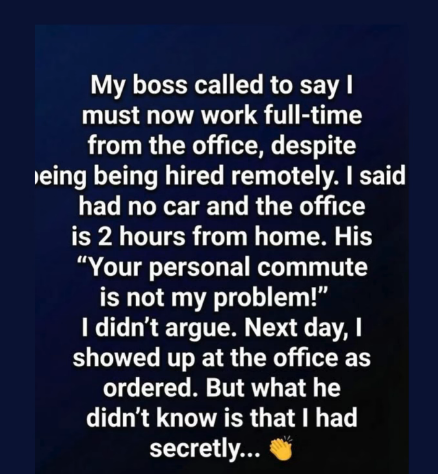
When my boss called that afternoon, I expected a routine update. Instead, he said, far too casually, “We’re ending remote work. Starting Monday, you’re expected in the office full-time.”
I reminded him I’d been hired as fully remote. That it was in my contract. That I lived two hours away and didn’t own a car.
He paused, then said, “Your personal commute is not my problem.”
I didn’t argue. I just said, “Okay. I’ll be there.”
What he didn’t know was that I’d been preparing for this for months.
His attitude had been shifting—snide comments about pajamas, jokes about “real work,” despite spotless reviews and strong metrics. When rumors of forced returns started, I quietly documented everything: my offer letter, performance reviews, emails, messages. Not to fight—but to be ready.
Monday came. I woke at 4:30 a.m. My commute took four hours a day. The office was loud, distracting, and exhausting. By Thursday, he remarked that I looked tired. I agreed.
On Friday, HR sent a company-wide email inviting concerns about policy changes.
I replied.
I attached my contract, my reviews, and detailed how the sudden change—applied selectively—affected me. I asked one question: “Can you confirm whether this overrides my signed agreement?”
HR called a meeting.
They reviewed my contract. Asked my boss to explain. He stumbled. HR reminded him contracts are binding and selective enforcement isn’t fairness.
The outcome was simple: I was reinstated as fully remote, effective immediately.
The next week, my boss “moved on.”
I kept my job, my boundaries, and my dignity.
Sometimes, quiet compliance isn’t weakness—it’s strategy.