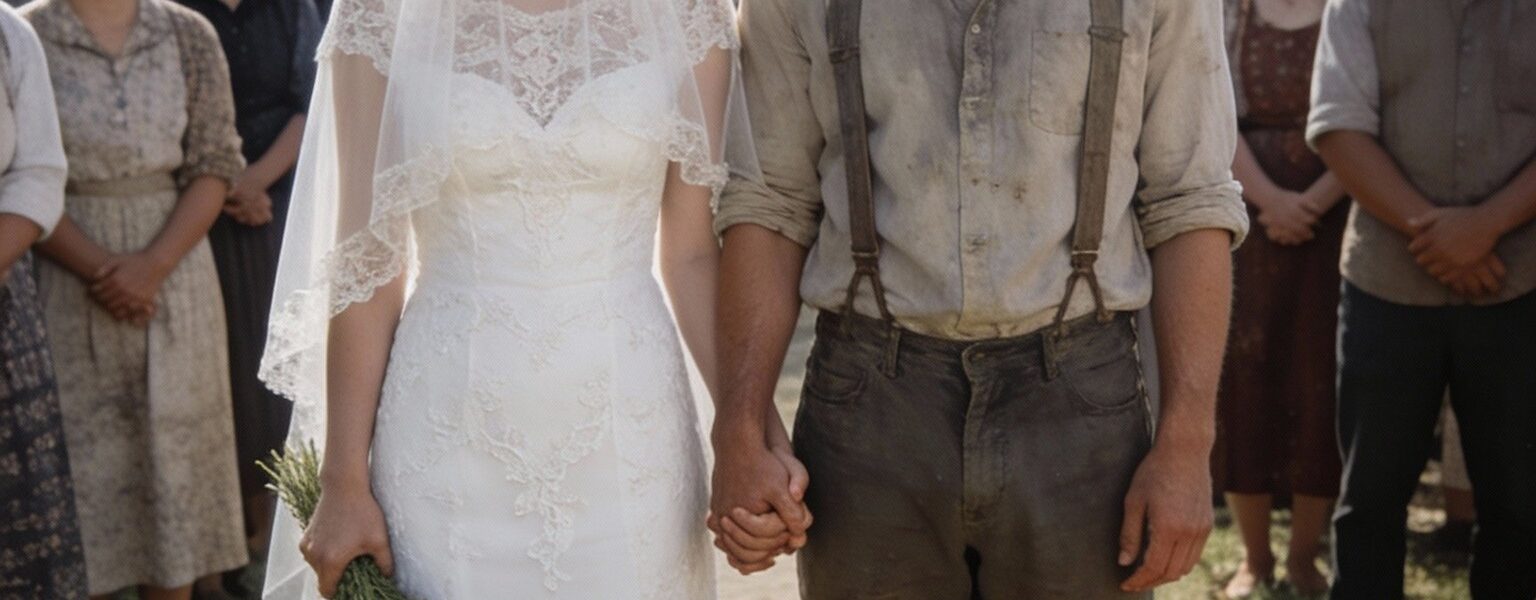
“The father married off his daughter, who was blind from birth, to a beggar — and what happened afterward surprised many people.”

“The father married off his daughter, who was blind from birth, to a beggar — and what happened afterward surprised many people.”
Zainab had never seen the world, but she had always known when it was watching her.
Not by eyes—by pauses.
By the way conversation stopped the moment she entered a room. By the way her sisters’ voices softened into performance when visitors arrived. By the way the air itself seemed to tighten whenever her father’s footsteps came down the hall.
She learned the shape of cruelty the way blind children learn walls: through impact, through bruises, through the sudden understanding of where you were not allowed to stand.
Their home smelled of rosewater and polished wood when guests came. On ordinary days it smelled of damp stone and old cooking oil. Zainab could tell the difference before the door even opened. She could tell when her sisters were wearing perfume. She could tell when her father had been drinking from the sharpness of his breath and the heavy way he cleared his throat as if swallowing bitterness.
Her mother had been the soft place in that house. The only voice that spoke Zainab’s name as if it belonged to a person. Her mother’s hands were warm, always smelling faintly of flour and mint. She used to braid Zainab’s hair slowly, humming while her fingers moved, and tell her, “Your blindness is not a curse. It is simply a different door to the same life.”

Then Zainab was five, and her mother stopped humming.
At first, the adults said “illness” the way people say “storm”—as if naming it might keep it from touching them. The house filled with whispers and foreign medicines and visits from men whose sandals squeaked against the floor. Zainab listened from her bed, counting footsteps, trying to measure the distance between herself and the bed where her mother lay coughing.
One night, her mother called her closer and pressed Zainab’s small hands against her own cheek.
“Remember me,” her mother whispered.
“I will,” Zainab promised, and she meant it. At five, promises felt like magic. She didn’t know yet that promises only survive when someone fights to keep them alive.
Her mother died before dawn.
By midday, her father had become a different man.
He didn’t cry where Zainab could hear it. He didn’t collapse. He did something harder and colder: he tightened. Like a cord pulled too tight, like a knot that refused to loosen. In the days after the burial, he walked through the house as if he was searching for the exact place love had failed him.
He stopped using Zainab’s name.
He didn’t even call her “daughter.”
He called her “that thing.”
At first, Zainab thought it was a mistake. A grief word. Something her father didn’t mean. But he kept saying it, and the repetition turned it into truth.
“That thing doesn’t belong in the main room,” he told the servants when Zainab wandered toward the dining area and followed the scent of meat and bread.
“That thing stays upstairs,” he said when visitors came, his voice low and sharp. “We are not putting our shame on display.”
Her sisters—Aminah and Samira—grew into the kind of beauty their father valued. Their eyes were praised constantly, their faces inspected and admired. Women from the neighborhood would touch their hair and say, “God has blessed you with daughters like jewels.”
Zainab would be standing a few steps away, silent and still, listening to the compliments fall like coins into a purse she was not allowed to carry.
When she was twelve, she learned the difference between being invisible and being hidden.
Invisible people are ignored by accident.
Hidden people are ignored on purpose.
Her father hid her.
He gave her a small room at the far end of the house with a narrow window that faced a wall. He told servants not to waste good fabric on her. He stopped paying tutors to teach her anything beyond what was necessary to be quiet.
The only reason she learned to read braille was because an old imam from the mosque took pity on her. He had once lost his own sight in old age, and when he heard about the blind girl kept behind doors, he brought books and taught her with patient hands.
When Zainab’s fingers touched those raised dots for the first time, it felt like the world had cracked open just a little. Letters formed beneath her touch. Words became maps. Stories became places she could go without permission.
She read everything she could get her hands on. Scriptures, poetry, old folk tales. She memorized the cadence of language, the way a sentence could stretch and bend and carry you somewhere else. In her small room, she became someone bigger than her father’s cruelty.
And still—at dinner time, she smelled food she was not allowed to eat at the table. She heard laughter downstairs when her sisters had guests and she did not. She listened to her father praise Aminah’s voice, Samira’s posture, their “good breeding,” as if Zainab’s existence had spoiled the bloodline.
It hardened something in her.
Not into hate.
Into clarity.
She didn’t daydream about being rescued. She daydreamed about leaving. About walking out of that house and never having to hold her breath again.
By twenty-one, she was tired in a way that had nothing to do with her body and everything to do with being treated like a burden for so long that you start to wonder if the world agrees.
That was when her father came into her room one morning and placed a folded piece of cloth on her lap.
“You’re getting married tomorrow,” he said flatly.
Zainab’s fingers froze on the braille page she’d been reading. The book was old and worn. She’d traced its words so many times she could feel the smoothness in certain places where her touch had softened the paper.
“Married?” she whispered.
Her father snorted.
“He’s a beggar from the mosque,” he continued. “You’re blind, he’s poor. A good match for you.”
Zainab felt as if the air had been sucked out of the room. Beggar. Poor. Blind. Match. Her life reduced to a transaction designed to remove her from the house as efficiently as possible.
She tried to speak, but her throat tightened. Words wouldn’t come. Grief, shock, humiliation—they all tangled together.
“Tomorrow,” her father repeated, as if she hadn’t heard. “And then you’re no longer my concern.”
He left without another word.
Zainab sat in silence for a long time, hands resting on the folded cloth. It felt like wedding fabric. Clean. New. Not meant for her. Her chest ached with a pressure that wasn’t tears—she had cried too much in her childhood to waste tears now.
She had no choice.
Her father had never given her any.
The next day, she was led into a small, hurried ceremony. She didn’t see the room, but she heard it: the scrape of chairs, the murmur of voices, the odd hush of people who came not to celebrate but to witness something humiliating. She smelled incense and sweat. Someone’s perfume, sharp and floral. She heard laughter that tried to disguise itself as polite coughs.
Her father shoved her forward.
“Take his arm,” he snapped.
A man’s arm—thin, rough fabric, the smell of dust—met her hand. His body was still, not trembling the way she expected. His skin was warm. His pulse steady.
Someone whispered, “The blind girl and the beggar.”
Someone else laughed behind their hand.
Zainab held her chin up anyway. She would not give them the satisfaction of hearing her cry.
When the ceremony ended, her father pressed a small bag into her hands and pushed her toward the man.
“Now it’s your problem,” he said, and walked away without looking back.
The phrase didn’t even register at first because her brain was still stuck on the way his boots sounded as he left. That sound—his departure—was the closest thing she’d ever get to freedom.
The beggar, whose name she learned was Yusha, led her away.
He didn’t talk much at first. His steps were measured. He didn’t tug her hard, didn’t yank her along like she was baggage. He guided her gently. When she stumbled over uneven ground, he slowed.
They walked past the last houses of the village. The air changed—less smoke, more open land. She heard the distant calls of birds. The wind moved through scrub grass like a whisper.
After a while, they stopped.
“It’s not much,” Yusha said quietly.
His voice startled her—not because it was harsh, but because it was gentle. There was no mockery in it. No cruelty. No impatience.
“But you’ll be safe here.”
Zainab stepped inside what she could tell was a small hut. The floor was packed earth. It smelled of damp soil and smoke. There was a woven mat. A pot in the corner. A thin blanket.
Her chest tightened with humiliation again, but she swallowed it.
This was her life now, she thought. A blind girl married to a beggar in a shack made of mud and hope.
She sat down on the mat and waited for the cruelty to arrive.
It didn’t.
Instead, she heard water being poured. A kettle being set near coals. Yusha’s movements were careful, unhurried. He didn’t slam things. He didn’t throw down objects the way her father did when he was angry.
He made tea.
He gave her his coat.
“You’ll be warmer,” he said.
“And you?” she asked cautiously.
“I’ve slept colder,” he replied, and she heard a faint smile in his voice.
Then he lay down by the door.
Not in the same place as her. Not close enough to make her tense.
By the door, like a guard.
Like she mattered.
That first night, she didn’t sleep. She listened. Waiting for betrayal. Waiting for him to demand something, to remind her she was unwanted.
Instead, he spoke softly.
“What stories do you like?” he asked.
Zainab blinked, stunned.
“No one’s ever asked me that,” she admitted.
Yusha was quiet for a moment.
“What do you dream about?” he asked next.
Dream. The word felt strange on her tongue, like a concept that belonged to other girls. Girls who were allowed to be seen. Girls who were treated like treasure.
“I don’t know,” she whispered.
Yusha didn’t laugh.
“Then we will find out,” he said.
The days turned into weeks.
And slowly, against everything Zainab believed about her fate, life began to soften.
Every morning, Yusha accompanied her to the river. He didn’t drag her. He walked beside her, letting her hold his arm. He warned her about stones and roots. He described the world with such detail that it felt like she could see through his words.
“The sun is coming up,” he’d tell her. “It’s pale at first, like a shy child. Then it turns gold and makes the water look like it’s carrying fire.”
Zainab would sit on the bank and listen, and for the first time in years, her chest wouldn’t feel tight.
He sang while she washed clothes. Old songs with simple melodies. Sometimes he would stop mid-verse, embarrassed.
“Your voice is nice,” she’d say, and he’d go quiet like he didn’t know how to accept a compliment.
At night, he told her stories of stars and faraway lands. Of deserts and mountains. Of palaces and caravans. He spoke like someone who’d seen more than a village road.
Zainab laughed for the first time in years.
It startled her, the sound. Like it belonged to another life.
And then something even more unexpected happened.
In that strange little hut, in a life she’d been thrown into like trash, Zainab fell in love.
Not with wealth. Not with beauty. Not with promises.
With kindness.
With gentleness.
With a man who treated her like a person when her own father couldn’t even say her name.
One afternoon, while they sat near the hut eating bread and dates, Zainab reached out and touched Yusha’s hand lightly.
His fingers paused.
“Were you always a beggar?” she asked softly.
Yusha’s breath caught.
He hesitated long enough that she felt the truth behind the pause.
“I wasn’t always like this,” he said quietly.
Then he fell silent.
Zainab could have pressed, but she didn’t. Because pressing felt like distrust, and she didn’t want to poison what they’d built with suspicion.
So she let the question rest.
Until the day the village reminded her that cruelty still existed outside the hut.
It happened when she went to the market alone.
Yusha had given her careful directions. Count ten steps from the hut to the path. Follow the stones. Turn right when you smell the baker’s stall. Stop when you hear the fountain. She memorized every detail like it was scripture.
She was proud of herself for going alone. For moving through the world without being guided like a child.
Then someone grabbed her arm violently.
“Blind rat,” a voice hissed.
Zainab froze.
She knew that voice.
Her sister Aminah.
Aminah’s fingers dug into her skin, hard enough to leave marks.
“Are you still alive?” Aminah spat. “Still playing at being a beggar’s wife?”
Zainab forced herself to stand straight.
“I am happy,” she said.
Aminah laughed cruelly.
“You don’t even know what he looks like,” she whispered. “He’s trash. Just like you.”
Zainab’s chest tightened, but she refused to flinch.
Then a different voice leaned closer—an older woman at the market, someone who sounded nervous, as if speaking truth was dangerous.
“He is not a beggar,” the voice whispered. “Zainab… you have been lied to.”
Zainab’s breath caught.
“What?” she whispered.
But Aminah yanked her again, and the moment shattered. Zainab stumbled away, heart pounding, the words echoing in her skull.
Not a beggar.
Lied to.
She found her way home shaking.
She sat inside the hut until evening, hands clenched in her lap.
When Yusha returned, she didn’t wait.
“Tell me the truth,” she said, voice firm in a way she didn’t know she still possessed. “Who are you really?”
Silence filled the hut.
Yusha’s breath was heavy.
Then he knelt in front of her and took her hands.
His heart was beating strongly. Fast. Like a man bracing for impact.
“You should never have known yet,” he whispered. “But I can’t lie to you anymore.”
Zainab’s throat tightened.
He took a deep breath.
“I am not a beggar,” he said.
She held her breath.
“I am the son of the Emir.”
The words didn’t land all at once. They hit in waves.
Prince. Royalty. Palace. Power.
Zainab’s mind replayed everything—his calmness, his careful speech, the way he described the world like he’d actually seen it, the way his hands didn’t move like someone broken by poverty.
She withdrew her hands sharply.
“Why?” she asked, voice trembling. “Why did you let me believe you were a beggar?”
Yusha stood slowly.
“Because I wanted someone who would see me,” he said quietly. “Not my wealth. Not my title. Just me.”
Zainab’s chest heaved.
“You chose me,” she whispered.
“I did,” he said. “I watched you for weeks. I heard how you were treated. I heard your father calling you a curse. I heard the village laughing. And I thought… if anyone could love without being tempted by power, it would be you.”
His voice broke slightly.
“You deserved to be chosen.”
Zainab sank onto the mat, legs weak.
Love and anger wrestled inside her. Betrayal mixed with disbelief.
“And now?” she whispered. “What happens now?”
Yusha knelt beside her again.
“Now you’re coming with me,” he said. “To the palace.”
Zainab’s heart leapt in fear.
“But I’m blind,” she whispered. “How can I be a princess?”
Yusha’s voice softened.
“You already are,” he said. “My princess.”
That night, Zainab barely slept.
In the morning, she heard the sound of horses and wheels outside. A carriage. Guards. The metallic clink of armor.
Yusha guided her out.
The air outside was different—cleaner, sharper, like the world had widened.
Hands—gloved, respectful—helped her into the carriage. Voices bowed to Yusha. Titles spoken in careful tones.
Zainab held Yusha’s arm tightly as the carriage began to move.
Her entire life was changing again, but this time it wasn’t being ripped away.
It was being offered.
When they arrived at the palace, she felt it before she heard it. The space. The echo of footsteps on stone. The hush of many people watching. The smell of polished floors, incense, and fresh flowers.
Whispers rippled.
“The prince returned.”
“And with a blind girl?”
“His wife?”
Zainab’s spine stiffened.
Yusha squeezed her hand gently.
“Stay close,” he murmured.
A woman stepped forward. The room seemed to tense around her. Zainab didn’t need sight to recognize power—the way people held their breath around it.
The Queen.
Her voice was calm but sharp.
“So,” the Queen said. “This is her.”
Yusha’s grip tightened protectively.
“This is my wife,” he said. “The woman I chose.”
A pause.
Then the Queen’s footsteps moved closer. Zainab bowed instinctively, the way she’d been taught to bow to anyone who might harm you.
Silence stretched.
Then—unexpectedly—the Queen’s hands touched Zainab’s shoulders.
Not rough. Not dismissive.
Gentle.
“So,” the Queen said quietly, and there was something strange in her voice—recognition, perhaps. “She is my daughter.”
Zainab’s throat tightened so hard she nearly choked.
Relief flooded her like warm water.
Yusha leaned close and whispered, “I told you. You’re safe.”
But safety was only the beginning.
The palace was filled with eyes that couldn’t see past her blindness. Whispers followed her through corridors. Some nobles spoke to her like she was a fragile ornament, a curiosity. Others avoided her completely.
Zainab learned quickly: she had been chosen by a prince, but she still had to earn her place among people who valued appearances like religion.
One morning, she was summoned to court.
The room was large. Voices echoed. She smelled expensive perfumes and sharp colognes. She heard the subtle shift of silk and the click of jewelry.
Someone muttered, “A blind princess… how absurd.”
Yusha’s voice rose above the murmurs.
“I will not be crowned,” he declared, “until my wife is accepted and honored in this palace.”
The room erupted in murmurs.
Zainab’s heart pounded.
“Would you give up the throne for me?” she whispered.
“I did it once,” Yusha murmured back. “I’d do it again.”
The Queen stood.
“So let it be known,” she said, voice carrying authority like thunder, “from this day forward, Zainab is Princess of the Royal House. Anyone who disrespects her disrespects the Crown.”
Silence.
Not fearful silence.
Obedient silence.
Zainab exhaled slowly.
For the first time in her life, she did not feel small.
She still couldn’t see the palace walls, the chandeliers, the gold, the splendor.
But she could feel something far more powerful than beauty:
Respect being forced into existence.
Still, even as acceptance began to form, Zainab knew the shadow of her father’s hatred hadn’t vanished. She’d been thrown away like trash. People like her father didn’t accept that their discarded things could become treasured elsewhere.
And she was right.
Because two weeks later, the palace received a visitor from her village.
Her father.
He arrived demanding to see “his daughter,” as if she had always belonged to him.
Zainab heard the commotion before she saw it—raised voices, guards moving, the Queen’s calm commands.
Yusha came to her room, face tense.
“He’s here,” he said quietly.
Zainab’s stomach turned cold.
“What does he want?” she whispered.
“Control,” Yusha said simply.
They brought her to the hall where her father stood.
His voice hit her like a slap.
“That thing,” he muttered before catching himself, realizing where he was. He shifted into polite tone.
“My daughter,” he corrected. “I’ve come to… reconcile.”
Zainab stood taller.
“I have a name,” she said calmly.
Her father’s breath hitched. He didn’t like being corrected.
“You are blind,” he snapped before he could stop himself. “You should be grateful you were taken.”
The Queen’s voice cut through the hall like steel.
“You will speak with respect,” she said.
Her father turned, startled.
“I am her father,” he said, trying to sound important.
“And she is my daughter now,” the Queen replied coldly. “You gave her away like a burden. You do not get to claim her when she becomes valuable.”
Zainab’s father’s voice sharpened.
“She is not valuable,” he hissed. “She is cursed.”
Zainab’s heart pounded, but she did not flinch.
“No,” she said quietly. “I was unloved.”
That line sliced deeper than any insult. The room went silent.
Her father sputtered.
Yusha stepped forward.
“You called her ‘that thing,’” Yusha said, voice low and dangerous. “You hid her. You starved her of dignity. And now you stand here asking for reconciliation?”
Her father swallowed, sensing he had miscalculated.
“I want compensation,” he said, and the truth finally leaked out. “If she is princess now, then I deserve—”
“You deserve nothing,” Zainab said.
Her voice did not shake.
For the first time in her life, she heard her father’s fear.
Not fear of punishment.
Fear of losing control.
The Queen turned to the guards.
“Remove him,” she said.
Her father shouted, cursed, claimed injustice.
But his voice faded as he was dragged away.
Zainab stood in the silence afterward, trembling—not from fear now, but from release.
Yusha took her hand.
“You did that,” he whispered.
Zainab exhaled slowly.
“I didn’t think I could,” she admitted.
“You’ve always been able,” he said. “You just were never allowed.”
From that day forward, Zainab stopped thinking of herself as a blind girl who had been rescued.
She was a princess, yes.
But more than that—she was a woman who had survived cruelty without becoming cruel.
She began taking an active role at court. She listened carefully in meetings, reading intentions through tone and hesitation. She offered solutions that made people pause—not because she dazzled them with appearance, but because she understood something most of them never had to learn:
Power isn’t control.
Power is clarity.
People began to come to her privately. Servants with sick children. Merchants struggling with taxes. Nobles with quiet fears they couldn’t say out loud.
Zainab listened.
She didn’t solve everything.
But she made people feel seen.
And for someone who had been treated as invisible her whole life, making others feel seen felt like justice.
Years later, when Yusha finally took the throne, Zainab stood beside him—not as an ornament, not as a pity story, but as an equal. A queen whose eyes could not see faces but could see hearts in a way that made lies impossible.
And in her private room, tucked in a wooden box, she kept one small object from her old life:
An old, worn braille book.
The one she had been reading the day her father told her she was getting married to a beggar.
She kept it not as pain.
As proof.
Proof that the world can call you a curse and still be wrong.
Proof that someone can throw you away and still fail to erase you.
Proof that love—real love—does not begin with how you look.
It begins with how you are held.
And for the first time, Zainab did not need anyone to see her to know she mattered.
The end.