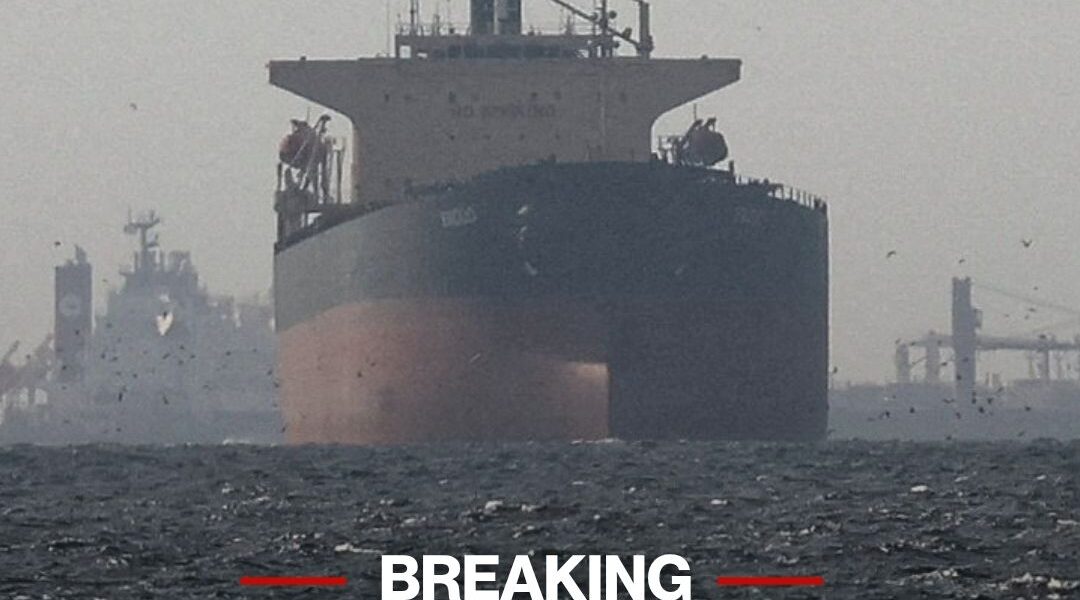
UK agrees to let US military use its bases for strikes in the Strait of Hormuz after Trump calls European allies ‘cowards’ for refusing to help

UK agrees to let US military use its bases for strikes in the Strait of Hormuz after Trump calls European allies ‘cowards’ for refusing to help
The British government partially reversed course Friday, allowing the US to use UK bases to carry out airstrikes aimed at clearing the Strait of Hormuz of Iranian obstacles.
The change in policy was announced by British Prime Minister Keir Starmer’s office just hours after President Trump called European allies “cowards” for refusing to “help open” the crucial waterway in the Persian Gulf – where Iran has been attacking oil tankers in retaliation for Operation Epic Fury.
“[T]he agreement for the US to use UK bases in the collective self-defence [sic] of the region includes US defensive operations to degrade the missile sites and capabilities being used to attack ships in the Strait of Hormuz,” Starmer’s office said in a statement.

London had previously allowed the US to use its bases only to prevent Iran from putting British interests or lives at risk — as when missiles from Tehran targeted UK forces on Cyprus early in the war.
Starmer reportedly has concerns that the US strikes on Iran may violate international law, and that allowing the US to use UK bases may implicate Britain. The prime minister has also argued it wasn’t in his country’s “national interest” to help the US attack Iran.
“Ministers condemned Iran’s expansion of its targets to include international shipping,” the statement continued. “They agreed that Iran’s reckless strikes, including on Red Ensign vessels and those of our close allies and Gulf partners, risked pushing the region further into crisis and worsening the economic impact being felt in the UK and around the world.”
“[T]he UK remains committed to defending our people, our interests and our allies, acting in accordance with international law and not getting drawn into the wider conflict,” it concluded. “Ministers underlined the need for urgent de-escalation and a swift resolution to the war.”

The Strait of Hormuz – responsible for a fifth of the world’s oil exports – has been effectively closed by Iran since Trump launched the joint US-Israeli attack on the country on Feb. 28.
Earlier Friday, Trump ripped into the UK and other members of the NATO alliance on Truth Social.
“Without the U.S.A., NATO IS A PAPER TIGER!” Trump fumed. “They didn’t want to join the fight to stop a nuclear-powered Iran.
“Now that fight is Militarily WON, with very little danger for them, they complain about the high oil prices they are forced to pay, but don’t want to help open the Strait of Hormuz, a simple military maneuver that is the single reason for the high oil prices. So easy for them to do, with so little risk. COWARDS, and we will REMEMBER!”

In an effort to get ships safely through the strait, Trump initially floated offering US naval escorts to vessels and attempted to entice them to make the risky voyage with a new $20 billion reinsurance program, but found few takers.
Several major US allies balked at helping with ship escorts.
The leaders of the UK, France, Germany, Italy, Japan, the Netherlands, and Canada teased offering Trump some assistance with securing the strait on Thursday in a vague joint statement.
“We express our readiness to contribute to appropriate efforts to ensure safe passage through the Strait,” the sextet said. “We welcome the commitment of nations who are engaging in preparatory planning.”
Gen. Dan Caine, chairman of the Joint Chiefs of Staff, said Thursday that the US is deploying new aircraft to help break through the bottleneck by weakening Iran’s military threat to ships.
Low-flying A-10 Thunderbolt II jets are “hunting and killing fast-attack watercraft in the Straits of Hormuz,” Caine said at the Pentagon.
“In addition, AH-64 Apaches have joined the fight on the southern flank… and that includes some of our allies who are using Apaches to handle one-way attack drones.”
The Strait’s closure has caused a dramatic jump in global fuel prices — with Brent crude nearing $107 per barrel on Friday — up from around $70 a month ago.
Japanese Prime Minister Sanae Takaichi told Trump Thursday in the Oval Office that “the global economy is now about to experience a huge hit because of these developments.”
Trump has deployed a Marine Corps expeditionary group that’s expected to arrive in the region by the end of the month, offering additional military options.