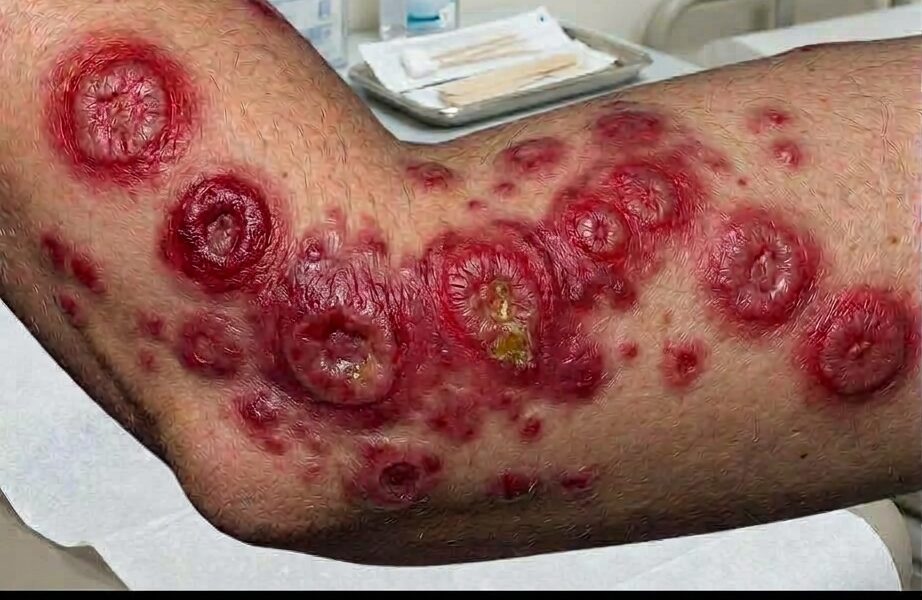

3. Irritant Contact Dermatitis
Irritant contact dermatitis occurs when a physical or chemical substance directly damages the skin’s protective outer barrier. The pattern of the rash is often a major clue: red dots or patches typically appear precisely where the product made contact with your skin.
-
Common Triggers: Soaps, alcohol-based hand sanitizers, laundry detergents, household cleaning products, cosmetics, fragrances, rough fabrics, adhesives, frequent handwashing, friction, or trapped sweat.
-
Typical Symptoms: Redness, small bumps, dryness, burning, itching, or peeling skin (commonly seen on the hands and wrists).
-
What You Should Do: Stop using the suspected product and give your skin barrier time to rest and recover.
When to seek care: If the rash persists despite removing the trigger, becomes increasingly painful, spreads rapidly, blisters, or is accompanied by a fever or overall feeling of illness, consult a healthcare professional.
4. Allergic Skin Reactions
Unlike harmless vascular spots (such as cherry angiomas), allergic rashes are driven by an immune system response and are almost always itchy or inflamed.
-
Common Symptoms: Intense itching, redness, raised bumps, localized swelling, hives, or a warm, burning sensation.
-
Potential Triggers: Certain foods, oral or topical medications, cosmetics, plants (such as poison ivy), insect bites, latex, or specific dyes.
🚨 EMERGENCY RED FLAGS Seek immediate emergency medical care if a skin rash is accompanied by:
Swelling of the lips, tongue, face, or throat
Difficulty breathing, wheezing, or tightness in the chest
Dizziness, confusion, or faintness
Rapidly spreading, widespread hives
5. Insect Bites
Not all sudden red dots stem from a medical skin condition—sometimes the culprit is simply an insect bite. Mosquitoes, fleas, bedbugs, and mites frequently leave behind small, irritated bumps.
-
Key Characteristics: Itching, localized swelling, a visible central puncture mark, or clusters of spots appearing in lines or small groups.
-
Location Clues: Bites most commonly show up on exposed areas of skin like the arms, hands, legs, and ankles, especially after sleeping or spending time outdoors.
-
What You Should Do: Because many bites look identical, inspect your sleeping environment, bedding, household pets, and recent outdoor activities before assuming the spots are caused by a skin disorder.
6. Heat Rash (Prickly Heat)
In hot or humid environments, sweat ducts can become temporarily blocked, trapping sweat beneath the skin and causing an inflammatory response known as heat rash (miliaria).
-
Typical Symptoms: Clusters of tiny red bumps, a prickly or stingy sensation, and redness concentrated in sweat-prone areas or places where clothing creates friction.
-
Prevention & Relief: Move to a cool, shaded, or air-conditioned area, keep the skin dry, and wear loose, breathable fabrics.
If the rash persists long after you have cooled down or develops unusual features, a medical evaluation may be needed to rule out other causes.
7. Folliculitis (Inflamed Hair Follicles)
If your red bumps are centered directly around individual hair follicles, you may be dealing with folliculitis—a common condition caused by inflamed or infected hair follicles. The spots frequently resemble tiny pimples and may occasionally develop small whiteheads or pus caps.
-
Common Triggers: Shaving, waxing, friction from tight clothing, trapped sweat, bacteria, yeast, or heavy skin products.
-
Common Locations: Areas subject to frequent shaving or friction, such as the beard area, neck, chest, back, thighs, or buttocks.
-
What You Should Do: Mild cases often clear up with gentle cleansing, warm compresses, and avoiding friction or shaving.
When to seek care: Persistent, painful, rapidly spreading, or pus-filled bumps should be evaluated by a healthcare professional, as targeted antibiotic or antifungal treatment may be required.
8. Viral or Bacterial Infections
Rashes are frequently a body-wide symptom of a viral or bacterial illness. Because many infectious rashes look nearly identical on the surface, the overall clinical picture matters much more than the appearance of a single spot.
-
Accompanying Symptoms: Sudden rashes paired with a fever, fatigue, sore throat, muscle aches, headache, swollen lymph nodes, cough, or stomach upset.
-
What You Should Do: If tiny red dots appear alongside a fever or a general feeling of illness, seek professional medical guidance rather than relying on photo comparisons or self-diagnosis.
9. Medication-Induced Skin Reactions
A new prescription, over-the-counter medication, or dietary supplement can sometimes cause a drug-induced skin reaction. These rashes often develop shortly after starting a new substance.
-
What to Track for Your Doctor:
-
The exact name of the new medication or supplement
-
The start date and when the rash first appeared
-
Whether the spots are spreading, itching, burning, or swelling
-
-
Important Safety Caution: Do not stop taking a vital prescription medication without speaking to your prescribing clinician first—unless you are experiencing a severe allergic reaction that requires emergency care.
10. Petechiae & Blood Clotting Concerns
Tiny, widespread red, purple, or dark spots that look like pinpoint dots under the skin could be petechiae. Petechiae occur when tiny capillaries bleed into the skin, often linked to low platelet counts or blood-clotting abnormalities.
-
Associated Warning Signs:
-
Easy or unexplained bruising
-
Frequent nosebleeds or bleeding gums
-
Unusually heavy menstrual periods
-
Prolonged bleeding from minor cuts
-
-
Potential Underlying Causes: Viral infections, auto-immune conditions, specific medications, nutritional or vitamin deficiencies, or bone marrow disorders.
When to seek care: Any cluster of unexplained pinpoint spots paired with easy bruising or unusual bleeding requires prompt medical assessment.
Quick Observation Tip: Do the Spots “Blanch” When Pressed?
Gently pressing down on a red spot with a finger or a clear glass can offer a useful clue for your doctor:
-
Blanching (Turns White): If the spot temporarily pales or turns white under pressure, blood is still contained inside surface blood vessels. This is typical of irritation, heat rash, or allergic reactions.
-
Non-Blanching (Stays Red): If the spot remains red or purple under pressure, blood has leaked out of the vessels into the skin tissue, which is characteristic of petechiae.
Note: The “press test” is a helpful detail to describe to a doctor, not a standalone tool for self-diagnosis.
When Should You Be Concerned?
While most tiny red spots are completely harmless, certain patterns warrant closer medical attention. You should consult a healthcare provider if the spots:
-
Appear suddenly in large, widespread numbers or spread rapidly across the body
-
Fail to improve or keep returning without a clear explanation
-
Bleed repeatedly or are accompanied by unexplained, easy bruising
-
Occur alongside systemic symptoms like persistent fever, severe fatigue, or unexplained weight loss
-
Develop shortly after starting a new prescription or over-the-counter medication
-
Look infected, feeling hot, increasingly painful, swollen, or oozing pus
🚨 Emergency Red Flag: A Rash Paired with Fever
When evaluating a skin symptom, how you feel overall is often far more important than the appearance of the rash itself. A few spots on an otherwise healthy person usually carry very different implications than a sudden rash accompanied by systemic illness.
SEEK URGENT MEDICAL CARE
If a sudden, rapidly spreading rash (especially one that does not blanch or turn white when pressed) occurs alongside any of the following symptoms, go to an emergency room or call emergency services immediately:
High fever or chills
Severe headache or stiff neck
Confusion, dizziness, or fainting
Difficulty breathing or rapid breathing
Sudden, severe weakness or rapid physical deterioration
Don’t Panic: A Red Dot Is Rarely Cancer
Searching skin symptoms online can easily provoke health anxiety, but a tiny red dot is not an automatic sign of skin cancer. Common, benign issues—such as cherry angiomas, minor skin irritation, insect bites, heat rash, or folliculitis—are vastly more common explanations.
While skin cancers take many forms, doctors generally evaluate lesions based on change and uniqueness over time rather than a single static dot. Have a spot evaluated if it:
-
Continually changes in size, shape, or color
-
Becomes a persistent sore that bleeds, oozes, or refuses to heal
-
Looks significantly different from all other spots on your skin (the “ugly duckling” sign)
Practical Tip: Track New Spots with Photos
If you notice an unfamiliar spot or rash, don’t try to squeeze or pick at it—scratching causes inflammation and minor bleeding that makes the original cause harder for a doctor to diagnose.
Instead, take a photo:
-
Use bright, direct natural light for a clear, in-focus picture.
-
Place a small coin or ruler next to the spot for scale.
-
Take follow-up photos every few days to monitor for changes in size, border, color, or spread.
What to Expect at a Doctor’s Visit
If you decide to have your skin evaluated, your doctor’s goal isn’t just to look at the spot, but to understand why it appeared in the context of your overall health. They will likely ask key questions to narrow down the cause:
-
Timeline & Progression: When did the spots first appear? Are they multiplying, spreading, or staying the same?
-
Physical Sensation: Do the spots itch, sting, or hurt?
-
Medication & Health History: Have you started any new medications or supplements recently? Have you had a fever or viral illness?
-
Bleeding & Bruising: Do you bruise easily, have frequent nosebleeds, or bleed longer than usual from cuts?
-
External Exposures: Have you switched soaps, detergents, or cosmetics? Have you been exposed to insects or plants outdoors?
Depending on what they find during a physical exam, your doctor may perform a quick press test, order routine blood work (such as a complete blood count to check platelets), or refer you to a dermatologist for specialized care.
Everyday Habits for Strong, Resilient Skin
While not every skin reaction or vascular spot can be prevented, maintaining a healthy skin barrier reduces the likelihood of irritation, infections, and breakouts:
-
Protect Against UV Damage: Wear broad-spectrum sunscreen and avoid prolonged, unprotected sun exposure to prevent long-term vessel and barrier damage.
-
Moisturize Daily: A well-hydrated skin barrier acts as a defense system, keeping environmental irritants out and moisture in.
-
Opt for Gentle, Fragrance-Free Formulas: Synthetic fragrances and harsh sulfates are leading causes of contact dermatitis and surface irritation.
-
Resist the Urge to Pick or Scratch: Squeezing or picking at bumps introduces bacteria, aggravates inflammation, causes minor bleeding, and increases the risk of permanent scarring.
-
Monitor New Medications: Keep a log of any new prescriptions, over-the-counter drugs, or supplements, and notify your physician if a rash appears after starting them.
-
Support Health from Within: Proper hydration, balanced nutrition, adequate sleep, and managing chronic stress directly influence your skin’s ability to heal and regenerate.
A Quick Self-Assessment Checklist
If you discover unexplained red spots on your arm, hand, or elsewhere, run through these diagnostic questions. While this checklist cannot provide a medical diagnosis, your answers will give your healthcare provider invaluable context:
1. Appearance & Texture
-
Are the spots bright red, dark purple, or pink?
-
Are they completely flat against the skin, or raised like bumps?
-
Do they fade or turn white when you press gently on them?
-
Are the spots centered around individual hair follicles?
2. Timing & Spread
-
Are the spots brand new, or have they been present for months or years?
-
Are they multiplying or spreading rapidly across other body parts?
3. Physical Sensations & Triggers
-
Do the spots itch, sting, or feel painful to the touch?
-
Have you recently switched soaps, cosmetics, or laundry detergents?
-
Could you have been exposed to insects, plants, or high heat?
4. Body-Wide Symptoms
-
Have you recently started a new medication or supplement?
-
Do you have a fever, unusual fatigue, or flu-like symptoms?
-
Are you noticing unexpected bruising, nosebleeds, or bleeding gums?
Understanding Your Skin’s Signals
Discovering tiny red dots on your skin can feel alarming, but their presence alone rarely signals a medical emergency. The vast majority of small red spots stem from benign, highly treatable conditions—ranging from harmless cherry angiomas and minor heat rash to routine insect bites, contact irritation, or folliculitis.
What matters most is the broader picture: how quickly the spots appeared, whether they are changing, and how you feel overall. A few stable red spots that have looked identical for years carry a very different meaning than hundreds of pinpoint, non-blanching spots that develop overnight alongside a fever.
Your skin is often a reflection of your internal health and external environment. The goal isn’t to fear every unexpected mark, but to stay attentive, recognize meaningful changes, and consult a medical professional whenever you need clarity or peace of mind.