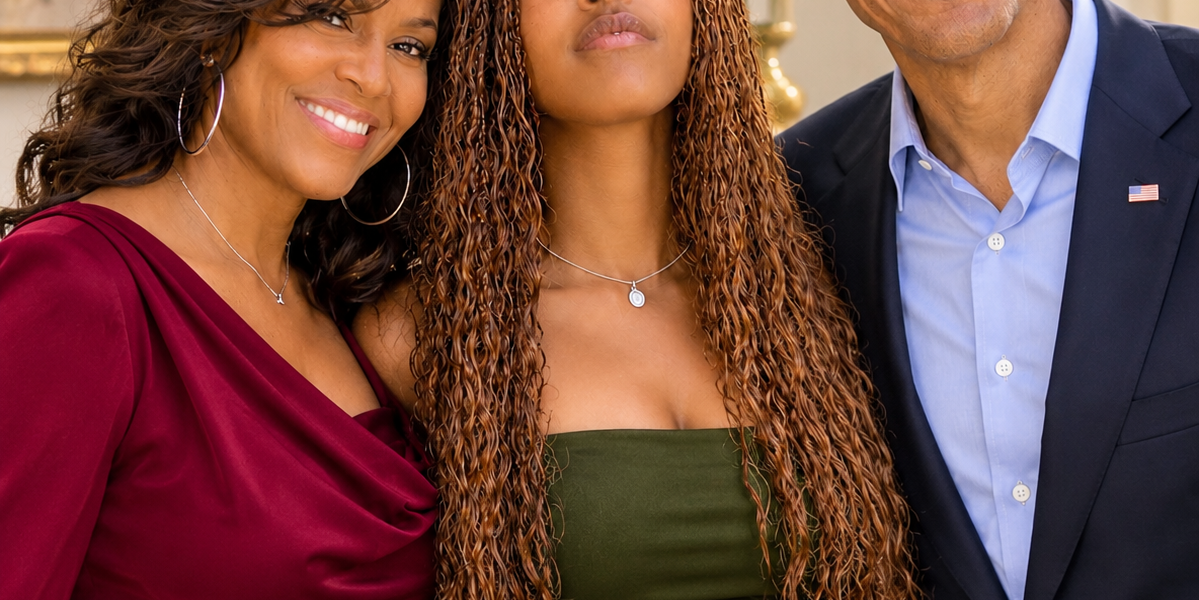
Breaking news out of Los Angeles: Malia Obama has just been officially confirmed as…

Malia Obama’s Recent Los Angeles Sightings Renew Focus on Her Independent Career Path
Having grown up under an intense global spotlight as the eldest daughter of former U.S. President Barack Obama and First Lady Michelle Obama, Malia Obama has navigated a level of public scrutiny few young people ever experience. From her childhood in the White House to her teenage years, even routine moments of her personal life frequently sparked national conversation.
Now, as an adult working in the entertainment industry, she is steadily carving out an identity defined by her own creative work rather than her famous surname.
Recent public appearances in Los Angeles have reignited online curiosity about her life and future plans. While casual sightings rarely offer real insight into a person’s private world, they have prompted observers to look closer at her deliberate transition from First Daughter to emerging filmmaker in one of the world’s most competitive industries.
Ultimately, what stands out about Malia’s trajectory isn’t the lingering media attention—it is how intentionally she is building a career anchored in her own education, interests, and artistic ambitions.


Growing Up in the White House: A Childhood Unlike Any Other
To understand why Malia Obama’s adult life continues to draw public fascination, it helps to consider the extraordinary circumstances of her upbringing. Born on July 4, 1998, in Chicago, Illinois, she was just ten years old when her father won the 2008 presidential election. Shortly afterward, she and her younger sister, Sasha, moved into the White House—instantly becoming two of the most recognizable young people in the world.
Like most children, Malia navigated schoolwork, friendships, and the gradual discovery of her own identity. Unlike her peers, however, she hit those milestones against a backdrop of historic political events, international diplomacy, constant Secret Service protection, and relentless global media coverage. Every public appearance was analyzed, and even her shifting teenage style routinely made headlines.
Throughout their two terms, Barack and Michelle Obama worked deliberately to give their daughters as grounded an upbringing as possible. Michelle Obama has often spoken about instilling responsibility, humility, and independence in her daughters despite their privileged surroundings. School remained a top priority, and ordinary routines were protected whenever possible.
Still, true normalcy was impossible inside one of the world’s most powerful political institutions. Spending eight formative years in the White House created an unusual dynamic between Malia and the public: millions of people felt they had watched her grow up through televised ceremonies and family portraits, even though they knew very little about her private life.
As Malia transitioned into adulthood, that distinction became critical. The young girl the world remembered from the White House was becoming an independent adult with her own ambitions and personal boundaries. Today, sightings of her in Los Angeles resonate partly because they mark the passage of time, and partly because she has refused to let her childhood define her adult identity.
Choosing Creativity Over Political Expectations
Children of prominent political families often face unspoken pressure to follow in their parents’ footsteps—whether through public service, advocacy, or foundation work. Instead of entering the political arena, Malia charted her own course into film, television, and storytelling.
While the entertainment industry can appear glamorous from the outside, the reality of writing, directing, and managing productions demands technical discipline and patience. Bringing a story to life requires mastering character arcs, dialogue, pacing, and seamless collaboration across writers, editors, and technical crews.
Malia began immersing herself in the mechanics of television well before graduating from college, taking early production roles on series like Extant and Girls. Working behind the scenes gave her firsthand insight into the grueling schedules, revisions, and teamwork required to turn a script into a finished episode.
By committing to the craft behind the camera, Malia has moved well beyond passing curiosity. She is steadily building a tangible body of creative work—giving audiences and critics a concrete standard by which to judge her evolution as a filmmaker on her own terms.