My Son and Daughter-in-Law Left Me With a $942 Restaurant Bill—So I Gave Them the Most Expensive Lesson of Their Lives

MY SON AND DAUGHTER-IN-LAW LEFT ME WITH A $942 RESTAURANT BILL…
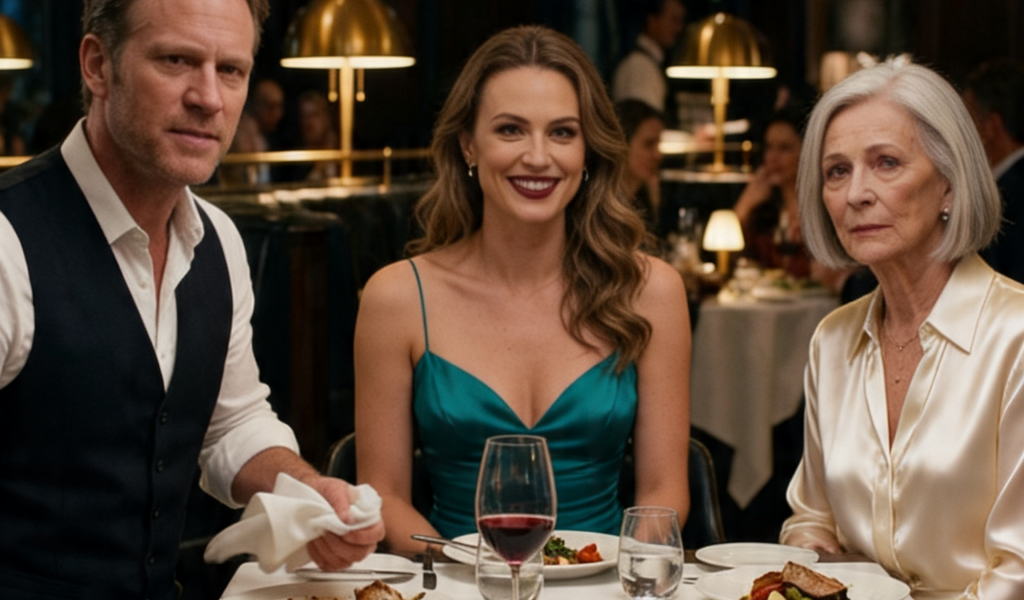
The waiter placed the check on the table between two empty chairs and one half-finished glass of Pinot Noir.
The wine was mine.
The chairs belonged to my son and daughter-in-law.
Or at least they had—until fourteen minutes earlier, when they walked out of the restaurant pretending an emergency had suddenly appeared.
What happened next wasn’t really about a restaurant bill.
It was about ten years of disrespect finally collecting interest.
THE MOMENT I REALIZED THE ENTIRE DINNER HAD BEEN A TRAP
I opened the leather folder.
$942.16
For a moment, I simply stared.
Not because I couldn’t afford it.
Because I suddenly understood exactly what had happened.
My son Donovan and his wife Fedra had already left.
Fedra’s migraine had arrived at the precise moment the bill arrived.
How convenient.
Almost rehearsed.
In fact, looking back, everything suddenly seemed rehearsed.
Fedra had worn her coat through most of dinner.
Donovan had already positioned the car.
Neither had shown the slightest surprise when the waiter disappeared to prepare the check.
And then there was the detail that hurt more than all the others.
The folded napkin.
Donovan had folded his napkin neatly before leaving.
A man rushing home because his wife is sick doesn’t stop to fold a napkin.
A man executing a plan does.
And suddenly, I wasn’t looking at a bill.
I was looking at betrayal.
THE BILL WASN’T THE REAL PROBLEM
The seafood tower.
The imported wine.
The Wagyu tasting flight.
The desserts.
The expensive cocktails.
None of those things truly mattered.
The money wasn’t what hurt.
The disrespect did.
Because this wasn’t the first time.
Not even close.
The bill was simply the first time they forgot I was paying attention.
For years, I had been the convenient grandmother.
The helpful mother.
The emergency babysitter.
The financial safety net.
The woman expected to smile while quietly absorbing whatever burden arrived next.
And I had smiled.
For far too long.
THE LAKE HOUSE I SOLD FOR MY SON
Eight years earlier, after my husband Roland died, I sold the lake house.
The lake house wasn’t just property.
It was twenty-six summers.
Family barbecues.
Fishing at sunrise.
Coffee on the dock.
Memories of a life that no longer existed.
When Donovan’s finances collapsed and he risked losing the house in Sacramento, I sold it without hesitation.
Three hundred twelve thousand dollars.
Gone.
Every penny invested in my son’s future.
Because that’s what mothers do.
We sacrifice.
We believe.
We trust.
And sometimes…
We trust the wrong people.
THE SIGNATURE THAT CHANGED EVERYTHING
Years later, Donovan came back needing help again.
This time it was a home equity line of credit.
A HELOC.
One hundred sixty-eight thousand dollars.
He called it a formality.
He said the bank needed a co-signer.
He promised everything was fine.
So I signed.
Because I was still grieving.
Because I was still his mother.
Because I still believed him.
What Donovan never realized was that buried deep inside that paperwork was something neither he nor Fedra paid attention to.
An inquiry clause.
A small paragraph.
A forgotten sentence.
A legal right.
And that clause was about to become the most expensive oversight of their lives.
THE PHONE CALL THAT STARTED THE END
I sat alone at the restaurant.
Ordered coffee.
Ordered dessert.
Tipped generously.
Then picked up my phone.
There was only one person I wanted to call.
Marshall.
My late husband’s oldest friend.
A retired banker.
A man who could smell financial dishonesty from across a state line.
He answered immediately.
“Camille.”
“Marshall.”
A pause.
Then:
“What happened?”
I told him everything.
The wine.
The seafood.
The folded napkin.
The abandoned table.
The bill.
When I finished, there was silence.
Then Marshall said six words that changed everything.
“I think it’s time, Camille.”
And suddenly I agreed.
THE THING FEDRA NEVER UNDERSTOOD ABOUT KIND WOMEN
People often mistake kindness for weakness.
Fedra certainly did.
She mistook my patience for ignorance.
My generosity for obligation.
My manners for surrender.
But there is something dangerous about kind people.
They see everything.
They simply choose peace until peace is no longer possible.
And Fedra had finally crossed that line.

THE LETTER THAT DESTROYED THEIR WEEK
By Monday morning, the paperwork was already moving.
By Wednesday, the certified letter arrived.
By Thursday, panic had set in.
Donovan called.
Again.
And again.
And again.
Fedra called.
Then left messages.
Then called Marshall.
Then accused me of overreacting.
Then accused me of being emotional.
Then accused me of having a “grief episode.”
That phrase would prove to be a spectacular mistake.
Because Marshall documented every word.
Every voicemail.
Every accusation.
Every attempt to manipulate the narrative.
The more they talked, the worse things became.
THE APOLOGY THAT CAME TOO LATE
On Sunday afternoon, another voicemail arrived.
This time Donovan sounded different.
Broken.
Honest.
Ashamed.
For the first time, he stopped talking about the bill.
Stopped talking about money.
Stopped talking about misunderstandings.
Instead, he said something I had been waiting years to hear.
“Mom… I knew.”
Not “I forgot.”
Not “I didn’t realize.”
Not “It wasn’t my fault.”
I knew.
Three words.
Three devastating words.
Because suddenly everything became clear.
The folded napkin.
The fake migraine.
The exit plan.
The abandonment.
He knew.
And he walked away anyway.
THE VISIT ON MY PORCH
The following Friday, Donovan showed up at my house.
Alone.
No Fedra.
No excuses.
No performance.
Just my son.
He looked exhausted.
Older.
Smaller somehow.
Like the weight of reality had finally caught up with him.
He sat across from me on the porch bench.
And for the first time in years, he told the truth.
“I’ve spent ten years letting my wife make your chair smaller at our table.”
The words hit harder than any apology.
Because they were true.
Every holiday.
Every birthday.
Every family gathering.
Little by little.
Year after year.
Until eventually I wasn’t family anymore.
I was funding.
Convenience.
Backup support.
A credit line with a pulse.
THE MORTGAGE THEY NEVER SAW COMING
I explained the terms calmly.
The HELOC would stand.
The debt would be repaid.
Every month.
For years.
Not because I needed the money.
Because consequences matter.
Because respect matters.
Because love without accountability becomes entitlement.
And entitlement had nearly destroyed our family.
Donovan cried.
I didn’t.
I’d already done enough crying for both of us.
THE TWIST NOBODY EXPECTED
People hear this story and assume it’s about revenge.
It isn’t.
If I wanted revenge, I could have taken the house.
Legally.
Completely.
Instead, I left them something far heavier.
Responsibility.
Because losing a house hurts once.
Learning why you almost lost it hurts forever.
And that lesson lasts much longer.
THE LAST LESSON MY HUSBAND TAUGHT OUR SON
Before he died, Roland used to say:
“Character isn’t revealed when people need help. Character is revealed when they no longer need it.”
For years, Donovan needed me.
Then one day he didn’t.
And that’s when I finally learned who he had become.
The good news?
People can still change.
But only after they face the truth.
I KEPT MY SEAT
A week after the restaurant incident, I sat alone in my kitchen.
Coffee steaming beside me.
Notebook open.
House quiet.
For the first time in years, nobody needed anything.
Nobody was asking for money.
Nobody was asking for favors.
Nobody was asking me to carry their burdens.
I picked up my pen and wrote:
“They left me at the restaurant with the bill.”
Then underneath it:
“So I left them with the mortgage.”
I stared at those words for a long time.
Then I added one final sentence.
“And I kept my seat at the table.”
Because the real victory wasn’t the money.
It wasn’t the HELOC.
It wasn’t even the apology.
The real victory was remembering something I’d forgotten years ago.
My kindness was a gift.
Not an obligation.
And from that day forward…
Anyone who wanted a place at my table would have to earn it.