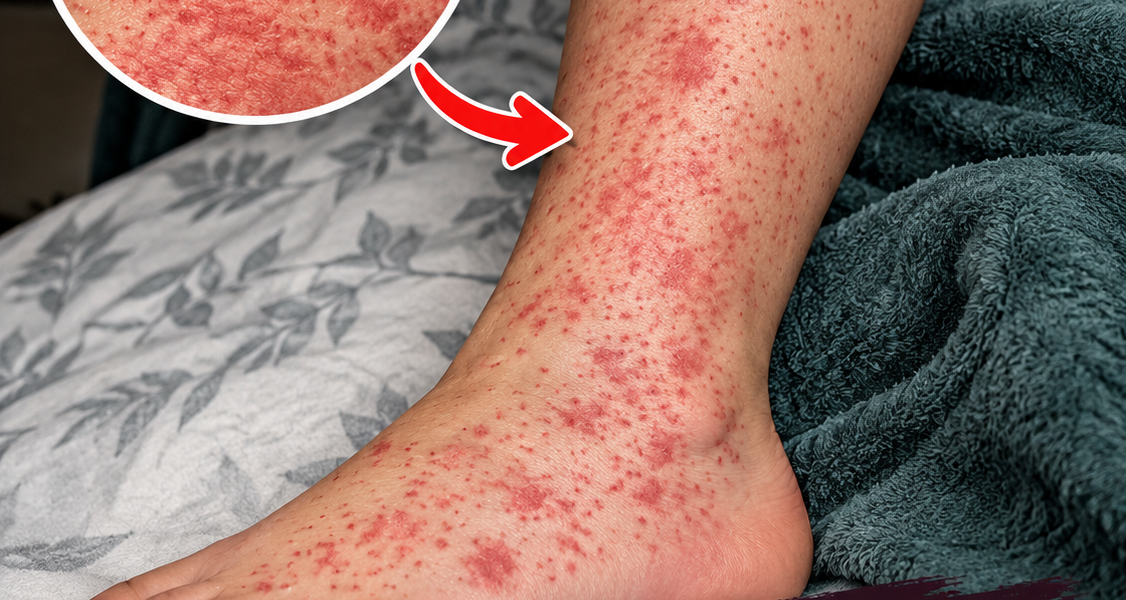
What’s Causing Your Morning Skin Rash? (And When It’s More Than Just a Bug Bite)

Waking Up with a Rash: Causes Beyond the Bedsheet
Discovering red, itchy, or inflamed skin first thing in the morning can be unsettling. Whether you notice a few scattered spots on your legs or a wide patch of irritation across your body, it’s natural to blame whatever happened overnight—from your mattress and laundry detergent to insects or even sharing a bed.
However, a morning rash isn’t always caused by what happens while you sleep. Many skin reactions take hours to fully surface after initial exposure to an allergen or irritant. Furthermore, nighttime conditions—such as body warmth and blanket friction—naturally intensify itching, making a pre-existing reaction far more noticeable when you wake up.
Here are two primary factors that often explain a morning rash:
1. Contact Dermatitis (Skin Reactivity)
Contact dermatitis occurs when your skin reacts to an irritating substance or allergen. Sleep-related triggers often include:
-
Laundry Products: New detergents, fabric softeners, or fragranced laundry additives.
-
Bedding & Clothing: Specific dyes, synthetic fabrics, elastic bands, or leftover cleaning chemicals on sheets.
Symptoms include redness, itching, swelling, dryness, or tiny bumps/blisters—typically concentrated where your body pressed directly against the fabric.
2. Heat & Sweat Retention
Sleeping in a warm room, bundling under heavy blankets, or wearing non-breathable sleepwear traps body heat and moisture against your skin for hours.
-
Prickly Heat / Heat Rash: Trapped sweat can inflame sweat ducts, leading to tiny, itchy bumps where moisture collects.
-
Eczema Flares: Perspiration acts as a natural irritant, triggering or worsening sensitive skin conditions overnight.
While heat and sweat are common culprits, widespread or severe redness should never be automatically dismissed as a simple heat rash without paying attention to accompanying symptoms.

Rashes After Sleeping: Insect Bites, Hidden Triggers, and When to Seek Care
1. Could It Be Insect Bites?
When new marks appear overnight, insects are often the first suspect—but identifying the culprit by sight alone is notoriously unreliable.
-
Bedbugs, Fleas, & Mosquitoes: All can cause itchy bumps, but skin reactions vary drastically. One person might develop large, swollen welts, while another shows no reaction at all.
-
Debunking the Stigma: Bedbugs have nothing to do with poor personal hygiene.
-
Confirming an Infestation: Finding a morning rash doesn’t automatically mean you have bedbugs. Inspecting your mattress, headboard, and bed seams can yield clues, but hiring a qualified pest professional is the only way to confirm an infestation.
2. Medical Conditions That Flare at Night
Not every morning rash stems from an external bite or allergen. Several medical conditions naturally worsen or become more noticeable overnight:
| Condition | Typical Nighttime Characteristics |
| Eczema | Flares up when skin becomes warm, dry, or irritated by tight sleepwear. |
| Hives (Urticaria) | Raised, itchy welts that appear suddenly and may shift location within hours. |
| Scabies | Caused by microscopic mites; triggers intense nighttime itching that requires clinical treatment. |
| Infections & Reactions | Fungal infections, drug reactions, viral exanthems, or bacterial issues can all manifest overnight. |
📌 Remember: A rash appearing after sleep is a clue, not a diagnosis. Factors like skin temperature, tenderness, pressure blanching (whether marks fade when pressed), and accompanying fever cannot be diagnosed through a simple photo.
Chapter 2: Investigating Your Bedroom Environment
Because your body spends hours in continuous contact with your mattress, sheets, and sleepwear, your sleeping environment is a key area to evaluate—methodically, without jumping to conclusions.
Step 1: Track Recent Changes ➔ Step 2: Audit Laundry Products ➔ Step 3: Evaluate Fabrics & Airflow
Step 1: Check for Recent Exposure Changes
Ask yourself if any of the following have changed recently:
-
Laundry Products: Detergent, fabric softener, or dryer sheets.
-
Personal Care: New body lotion, perfume, or shower gel.
-
Bedding & Travel: Newly purchased sheets, a different blanket, or a stay in a hotel or guest room.
-
Household Cleaning: New room sprays, mattress cleaners, or dusting products.
Step 2: Audit Laundry Habits
Fragrances, dyes, and preservatives in detergents frequently trigger skin sensitivities.
-
Switch to Fragrance-Free: Re-wash bedding and sleepwear in a gentle, hypoallergenic detergent.
-
Avoid Overusing Detergent: Using extra detergent leaves residue on fabric fibers that irritates skin overnight. Ensure thorough rinsing.
Step 3: Adjust Fabrics and Climate
-
Reduce Friction: Rough fabrics, tight elastic bands, and heavy seams irritate sensitive or dry skin. Choose soft, loose-fitting sleepwear.
-
Control Room Temperature: Overheating and sweat aggravate itching. Keep your bedroom cool, choose breathable fabrics, and avoid heavy, heat-trapping blankets.
🚨 Red Flag Symptoms: When to See a Doctor
Do not assume a widespread or severe rash is a simple bed allergy. Seek prompt medical attention if your rash is:
-
🟢 Extensive or Rapidly Spreading
-
🟡 Painful, Blistering, or Peeling
-
🔴 Accompanied by Fever, Chills, or Systemic Illness
-
🔵 Persistent or Worsening Over Several Days

Rashes After Sleeping: Insect Suspects, Shared Beds, and Critical Warning Signs
1. Could Insects Be Responsible?
If new itchy bumps appear overnight, focus on environmental clues rather than trying to diagnose the culprit by skin appearance alone.
-
🛏️ Bedbugs: Look for small dark fecal spots, shed skins, tiny white eggs, or live insects along mattress seams, bed frames, and headboard crevices. Note: Absence of visible signs does not completely rule them out, nor does a bite mark alone prove an infestation.
-
🐾 Fleas: More likely if pets reside in the home, though bites can occur without animals present.
-
🦟 Mosquitoes: Can enter through unscreened windows, open doors, or cracked screens.
💡 Pest Control Safety: If an infestation is suspected, inspect the room thoroughly and consult a licensed pest control professional. Never spray household insecticides on your skin, mattresses, or bedding unless explicitly stated on the product label, and never mix cleaning chemicals.
2. What If You Rash Appears After Sharing a Bed?
Sharing a bed doesn’t automatically mean a rash is contagious or caused by the other person. Two individuals can sleep in the exact same environment and react completely differently to heat, detergent, or insect bites.
       Is the rash contagious?
              │
    ┌─────────┴─────────┐
    ▼                   ▼
NON-CONTAGIOUS      CONTAGIOUS (Close Contact)
• Contact Dermatitis • Scabies (intense night itching)
• Hives              • Fungal Infections (Ringworm)
• Eczema Flares      • Viral/Bacterial rashes
-
Non-Contagious Flares: Contact dermatitis, hives, and eczema cannot spread between people. Unnecessary isolation or aggressive cleaning can add stress without solving the issue.
-
Contagious Conditions: Scabies (caused by microscopic mites) spreads through prolonged skin-to-skin contact or shared bedding. It produces intense nighttime itching and often affects multiple household members. A clinician must evaluate and prescribe treatment for all close contacts.
Chapter 3: Red Flag Symptoms & When to Seek Emergency Care
While many sleep-related rashes stem from mild irritation, others signal serious underlying medical emergencies.
🚨 Emergency Warning Signs Matrix
| Severity Level | Accompanying Symptoms | Possible Condition | Action Required |
| 🔴 CRITICAL (Life-Threatening) |
• Swelling of lips, tongue, or throat • Difficulty breathing, wheezing, or tightness • Faintness, dizziness, or confusion |
Anaphylaxis (Severe Allergic Reaction) | Call Emergency Services (911/112) immediately. Use an epinephrine auto-injector if prescribed. |
| 🟠 URGENT (Severe Infection / Vascular) |
• Rapidly spreading rash with high fever • Purple or dark red spots that do not fade when pressed (petechiae/purpura) • Severe headache or extreme weakness |
Serious bacterial/viral infection (e.g., Meningococcemia, Sepsis) | Seek Immediate Emergency Care. Do not wait for home tests. |
| 🟡 PROMPT EVALUATION |
• Painful blistering or skin peeling • Sores in the eyes, mouth, or genital areas • Rash starting shortly after a new medication |
Severe Cutaneous Adverse Reaction (e.g., SJS / TEN) | Contact a doctor or visit Urgent Care promptly. Stop suspect non-essential meds only under medical guidance. |
Practical At-Home Action Plan
-
Isolate Variables: Change one or two plausible factors at a time (e.g., switch to fragrance-free detergent) so you can pinpoint the true cause.
-
Wash Bedding: Laundering sheets and sleepwear in hot water according to care labels helps eliminate dust mites and chemical residues.
-
Know When to Stop Experimenting: If the rash continues to spread, recurs repeatedly, or causes severe discomfort, stop DIY treatments and consult a doctor.

Infection Signs, Medication Triggers, and Safe At-Home Care
1. Recognizing Infection & Inflammatory Warning Signs
Skin that becomes increasingly warm, swollen, tender, or painful may indicate an infection or a severe inflammatory process. Never ignore:
-
Redness that spreads beyond the original area
-
Pus, red streaks, or worsening pain
-
A rash affecting the entire body, appearing suddenly, or continuously worsening (even without a fever)
⚠️ Vulnerable Populations: Children, older adults, and individuals with weakened immune systems or chronic illnesses can develop complications quickly and require a lower threshold for seeking medical attention.
2. When Medications May Be Involved
Some medications can trigger skin reactions ranging from mild to dangerous.
-
Track the Timing: Note if the rash began soon after starting a new medicine, changing a dose, or taking a previously unused product.
-
Consult a Professional: Contact your prescribing clinician or pharmacist. Never independently stop essential prescription treatments unless emergency symptoms require it.
-
Prepare for Your Appointment: Bring a complete list of medicines, supplements, recent exposures, and allergy history.
3. Chapter 4: How to Soothe Irritated Skin Safely at Home
When a rash is mild and free of emergency warning signs, safe at-home care can help manage discomfort while you monitor your skin:
| At-Home Practice | Do’s and Don’ts |
| Gentle Washing |
• Do: Wash gently with lukewarm water and a mild, fragrance-free cleanser. • Don’t: Scrub vigorously or take hot showers, which worsen dryness and itching. |
| Cool Compresses |
• Do: Apply a clean, damp, cool cloth briefly to soothe heat and itching. • Don’t: Apply ice directly to the skin, which can cause cold injury. |
| Moisturizing |
• Do: Use simple, fragrance-free moisturizers on intact, dry skin (like eczema areas). • Don’t: Apply ordinary cosmetics to open sores, blisters, or infected skin. |
| Preventing Damage | • Do: Keep fingernails short to minimize scratching and secondary bacterial infections. |
4. 🚫 Cautions Regarding Creams & “Natural” Remedies
-
Avoid Cream Misuse: Steroid creams, antibiotic ointments, and antifungals are not interchangeable. Using the wrong cream can hide infections, delay proper diagnosis, or worsen symptoms. Sensitive areas like the face, eyelids, and genitals require extra caution.
-
Reject Dangerous Home Remedies: Never apply lemon juice, undiluted essential oils, alcohol, bleach, or household cleaning products to your skin. “Natural” does not automatically mean safe.
5. Summary Checklist Before Your Appointment
-
Note the Timeline: When did it start? Which areas were affected first? Did it spread?
-
Document Symptoms: Is there pain, itching, or fever?
-
Take Photos: Capture clear, well-lit photos of the skin changes over time (keep identifiable medical photos private).
-
Know When to Seek Care: Emergency symptoms require emergency care; spreading, painful, blistering, or unexplained rashes require timely professional evaluation.


